



Why Is My Espresso Gushing?5 Hidden Fixes(No Tech Needed)

blog avatar

Written by

Huazell

common.Published
May 29, 2026
  • blog

Follow us

Why Is My Espresso Gushing?5 Hidden Fixes(No Tech Needed)

Plain and simple: Press the button, and water pours out violently — no thick espresso stream at all. Your first thought? “Call the tech, the machine is toast.”
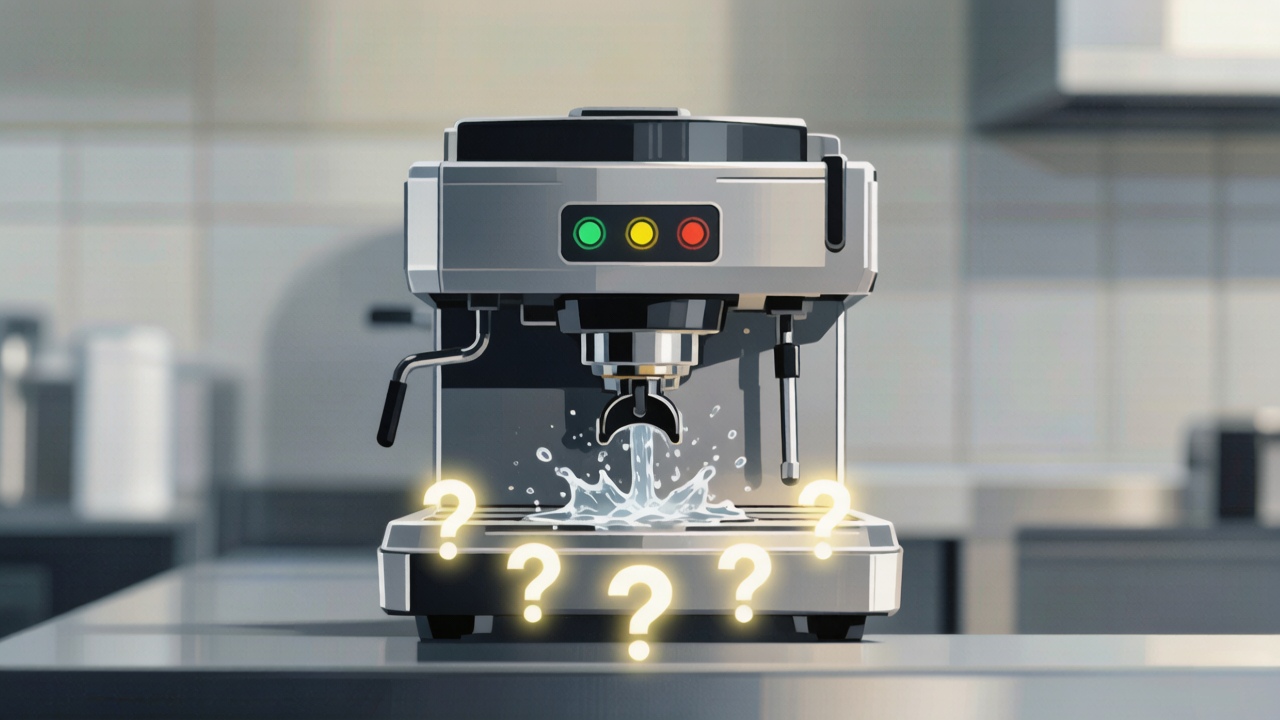
espresso gushing.jpg

Hold your horses. After years in the trenches of barista troubleshooting, I’ll tell you a secret: 80% of flow issues aren't mechanical failures. It’s usually a sloppy puck or a $3 part that needs replacing. I’ve been there, done that, and wasted way too much good coffee.

Here are the 5 real reasons your shot is gushing, ranked from operator screw-ups to hardware hacks.

1. The Tamping Fail: Micro-Fissures in the Puck

This is the #1 reason for espresso channeling that everyone loves to blame on the machine. Listen, your tamping technique matters more than your fancy grinder. If you tamp unevenly or it’s not firm enough, the water pressure will just blast through the weak spots in the coffee bed like it’s nothing.

How to fix it: Give the portafilter a gentle tap after tamping. If the puck shifts or feels loose, you didn't lock it in. Tamp vertically, apply consistent pressure, and stop trying to be fancy. No one cares if you spin the tamper like a DJ.

2. Grind Size Too Coarse: The "Sponge" Test

This is pure physics. I see rookies mess up their coffee extraction all the time because they ignore grind size adjustment. Using light roasts? You gotta grind finer than your usual dark roast, period.

How to fix it: Look at the resistance. If the tamper sinks into the coffee like it's soft butter or a sponge, it's way too coarse. Don't try to fix physics with more pressure. You'll just crack the puck. Just grind finer. End of story.

3. The Portafilter Basket Tolerance

Stop trusting that "genuine" label blindly. Mass-produced baskets have variances. One basket works perfect; another of the exact same model gushes like a busted faucet. It makes your solid tamping technique look useless.

How to fix it: Swap the basket. If the flow stabilizes instantly, you have a wonky basket. Hold it up to the light; if the holes aren't perfectly uniform, toss it. It’s not worth the headache.

4. The Shower Screen Gunk Trap

You wipe the group head, but what about behind it? Old coffee oils bake onto the shower screen, clogging half the holes. This chokes the water flow and screws up your coffee extraction.

How to fix it: Unscrew that nasty thing and soak it. If the brown sludge that comes off makes you want to puke, congrats—you found the issue.

5. The Group Gasket's Retirement Party

That black rubber ring gets a groove worn into it over time. When it can't hold the portafilter flush anymore, water leaks from the sides, causing espresso channeling that looks like a flood.

How to fix it: Lock in an empty portafilter. If water sprays out sideways instead of down, the gasket is shot. Replace it. Costs less than a latte.

Bottom line: Don't pay a technician $200 to tell you your grinder is set wrong or your gasket is old. Real barista troubleshooting starts with checking these five things first. Save your money for better beans.

Featured Blogs
Stainless Steel vs. Copper Boilers: What Really Determines Commercial Espresso Machine Performance?

Stainless Steel vs. Copper Boilers: What Really Determines Commercial Espresso Machine Performance?

Does a copper boiler automatically make a better commercial espresso machine? Inspired by a real B2B customer conversation, this article explores the differences between stainless steel and copper boilers, the engineering behind temperature stability, and why commercial buyers should evaluate real-world performance rather than material specifications alone.

Why Your Espresso Tastes Different Every Day: The Hidden Barista Setup Guide Most Shops Skip

Why Your Espresso Tastes Different Every Day: The Hidden Barista Setup Guide Most Shops Skip

A deep-dive guide for cafe owners and baristas revealing the hidden step every pro does during installation — calibrating water flow. Covers why factory defaults fail in real-world conditions, how a 5–10ml drift ruins extraction, the连锁 reactions of skipping this step, a full walkthrough of the calibration process, brand-specific instructions, how often to recheck, and common myths debunked.

How Many Espresso Shots Can a Commercial Machine Pull Continuously?

How Many Espresso Shots Can a Commercial Machine Pull Continuously?

Discover why a 2-group or 3-group high volume espresso machine maintains stable temperature even during zero-gap continuous extraction with two or three baristas working simultaneously. Backed by real chain store data: 80+ back-to-back shots on 2-group, 120+ on 3-group, without temperature drop.

Commercial Espresso Machine Troubleshooting: Solving Extraction Flow Problems & Espresso Shot Too Fast / Too Slow

Commercial Espresso Machine Troubleshooting: Solving Extraction Flow Problems & Espresso Shot Too Fast / Too Slow

If your commercial semi-automatic espresso machine is pulling shots too fast or too slow, don’t start by blaming the beans. Flow rate is the result of dose, grind, puck preparation, water pressure, group maintenance, and machine configuration. This guide breaks down what distributors, café owners, and service teams should check first.

Why Temperature Stability Is the Only Spec That Matters for Your Coffee Business

Why Temperature Stability Is the Only Spec That Matters for Your Coffee Business

Most cafés blame beans or baristas when coffee tastes off. Usually, it’s temperature drift in the semi-automatic commercial espresso machine. This piece shows why commercial rush hours break weak machines, what real stability looks like under load, and how a unit like the KY-T33​ held 92°C through 2,000 ml of continuous draw—dipping only 3–6°C after that, then recovering in 5–13 seconds. B2B buyers get the exact questions to ask, and the contract clauses that stop suppliers from hiding behind idle-temperature graphs.

Commercial Espresso Machine Group Head Sizing Guide for Cafés: Single, Double, or Triple? | HUAZELL

Commercial Espresso Machine Group Head Sizing Guide for Cafés: Single, Double, or Triple? | HUAZELL

This guide compares single, double, and triple group commercial espresso machines across peak throughput, daily volume reference, typical use cases, and electrical requirements. It explains why the double group remains the baseline for most independent cafés, when a triple group’s redundancy justifies its footprint, and why under-sizing is the more costly error. Includes a sizing table and procurement guidance on capacity headroom.