



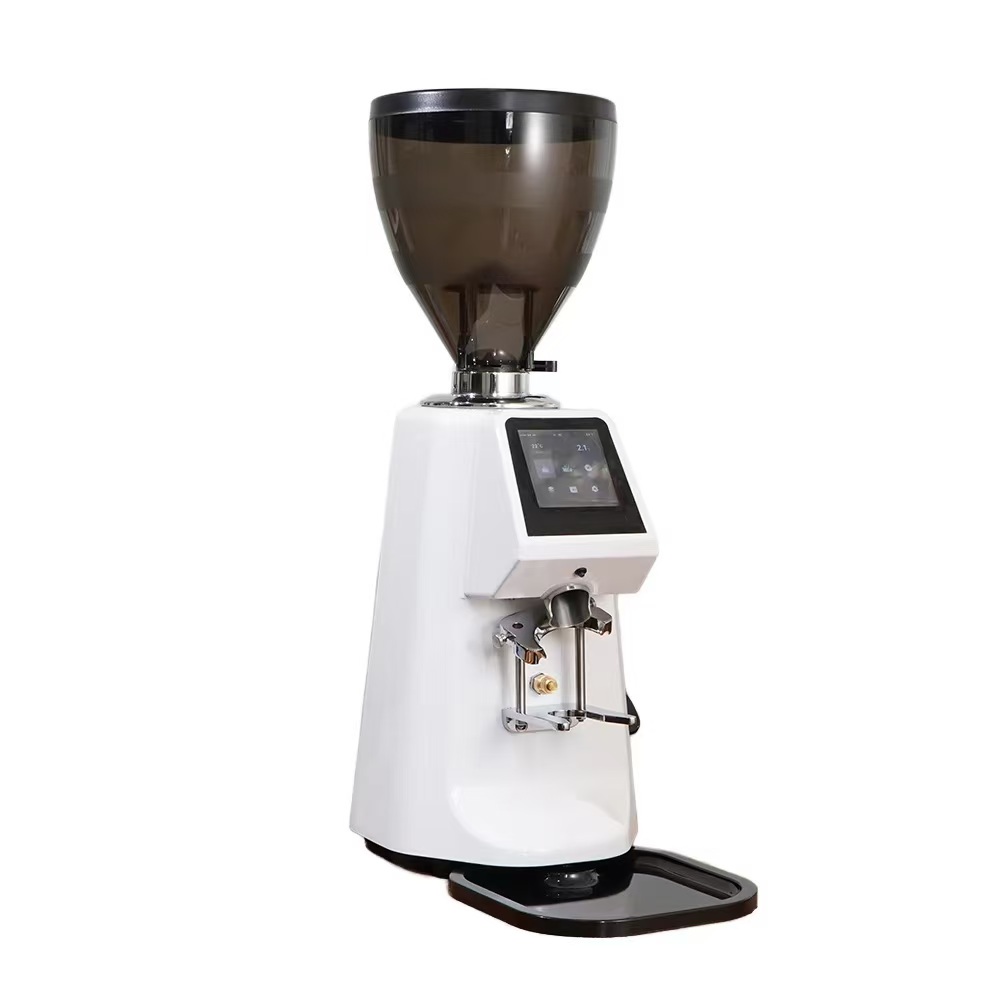
Why do many coffee shops still struggle with slow service, unstable espresso, and wasted coffee even after buying a good espresso machine? The problem often starts with the coffee grinder. If the grinder cannot produce stable grind consistency, accurate dose control, and enough speed for daily volume, every cup becomes harder to repeat. During peak service, heat, worn burrs, and poor grind quality can quickly create a gap between the recipe and the final drink. A professional commercial coffee grinder with 83mm SUS420 stainless steel flat burrs, a 600W pure copper motor, and timed or weight-based dosing gives cafes a stronger foundation for consistent commercial coffee service.
A commercial coffee grinder is essential because it controls grind consistency, dosing accuracy, workflow speed, and cup quality. For coffee shops, cafes, hotels, offices, and roasters, a stable commercial grinder helps produce consistent espresso, reduce coffee waste, and support high-volume service.
Choosing the right coffee grinder is not only about buying another machine for the bar. It is about matching the grinder to the menu, daily volume, baristas, espresso machine capacity, and long-term business demand. Below is a practical guide for B2B buyers.

Key Features of Our Commercial Coffee Grinder
83mm Flat Burrs for Better Grind Consistency
The core of this commercial coffee grinder is its 83mm SUS420 stainless steel flat burrs. Larger burrs generally produce a more uniform particle size distribution, which supports better grind consistency and cleaner extraction. For a coffee shop, this difference matters because espresso is sensitive to even small grind changes.
Flat burr grinders tend to produce a uniform and dense grind particle distribution, making them useful for espresso based drinks, single origin coffee, filter coffee, and tasting applications where flavor clarity is important. Compared with smaller home grinders, a commercial grinder is designed to hold stable grind quality under heavier commercial coffee demand.
600W Pure Copper Motor for Commercial Service
A commercial grinder must run longer and harder than home grinders. This coffee grinder is equipped with a 600W pure copper motor to support continuous grinding in busy cafes, restaurants, office coffee bars, and hotel service areas. Strong motor power helps the grinder carry repeated orders without slowing down the bar workflow.
Commercial grinders are usually built for long service and can support demanding coffee shop environments. Lower RPM motors can also help reduce heat transfer and static buildup, protecting coffee aroma during grinding. For buyers comparing Bunn, Mythos, La San Marco, or other espresso grinders, motor stability should be reviewed together with burr size, grind retention, and maintenance access.
5g/s Grinding Speed for Peak-Hour Throughput
Speed is one of the most important features for a commercial coffee grinder. With about 5g/s grinding capacity, this grinder helps reduce waiting time during breakfast rush, lunch service, and conference coffee demand. For a coffee shop with a high-volume menu, faster grinding means smoother throughput and less pressure on baristas.
A 2-group espresso bar often needs two grinders to avoid bottlenecks, especially when it uses one grinder for regular beans and another grinder for decaf or single-origin coffee. One grinder per espresso group head is commonly recommended for high-volume service. This kind of multi-grinder setup helps coffee shops match speed, volume, and flavor needs more effectively.
Timed and Weight-Based Dosing for Accuracy
This commercial coffee grinder supports both timed dosing and weight-based dosing. Timed dosing is suitable for fast espresso service, while grind-by-weight dosing technology improves precision when a coffee shop needs tighter recipe control. Better dosing accuracy reduces waste and helps each dose match the target espresso recipe.
For chain cafes and commercial coffee programs, accurate dose control also makes training easier. Baristas can follow preset values instead of relying only on personal experience. This helps produce more consistent drinks across different shifts, stores, and operators.
Wide Grind Size Control for Espresso and Filter Coffee
A good allround grinder should support different brewing methods. This coffee grinder can be adjusted for espresso, filter coffee, pour-over, French press, and sample testing. For cafes with a wider menu, an allround grinder reduces equipment complexity and helps the bar serve different drinks with one stable commercial grinder.
Stepless adjustment is especially useful because it allows precise dialing-in of coffee grind settings. A small grind size change can affect extraction time, body, sweetness, and bitterness. That is why coffee shops should prioritize consistency, speed, and durability when selecting a commercial coffee grinder.
Huazell Commercial Coffee Grinder Models for Different Coffee Shop Needs
Huazell provides three main commercial coffee grinder options for different coffee shop workflows: K64Y, KY-MD074, and KY-MD083. Instead of choosing only by price, B2B buyers should match the grinder to daily volume, espresso machine setup, coffee beans, bar space, and dosing requirements.
K64Y: 64mm Commercial Grinder for Compact Coffee Service
The K64Y commercial grinder is suitable for small coffee shops, office coffee corners, hotel meeting rooms, and light commercial coffee service. As the 64mm option in the Huazell coffee grinder range, it can be positioned as an entry-level or compact model for buyers who need stable espresso grinding without taking too much counter space.
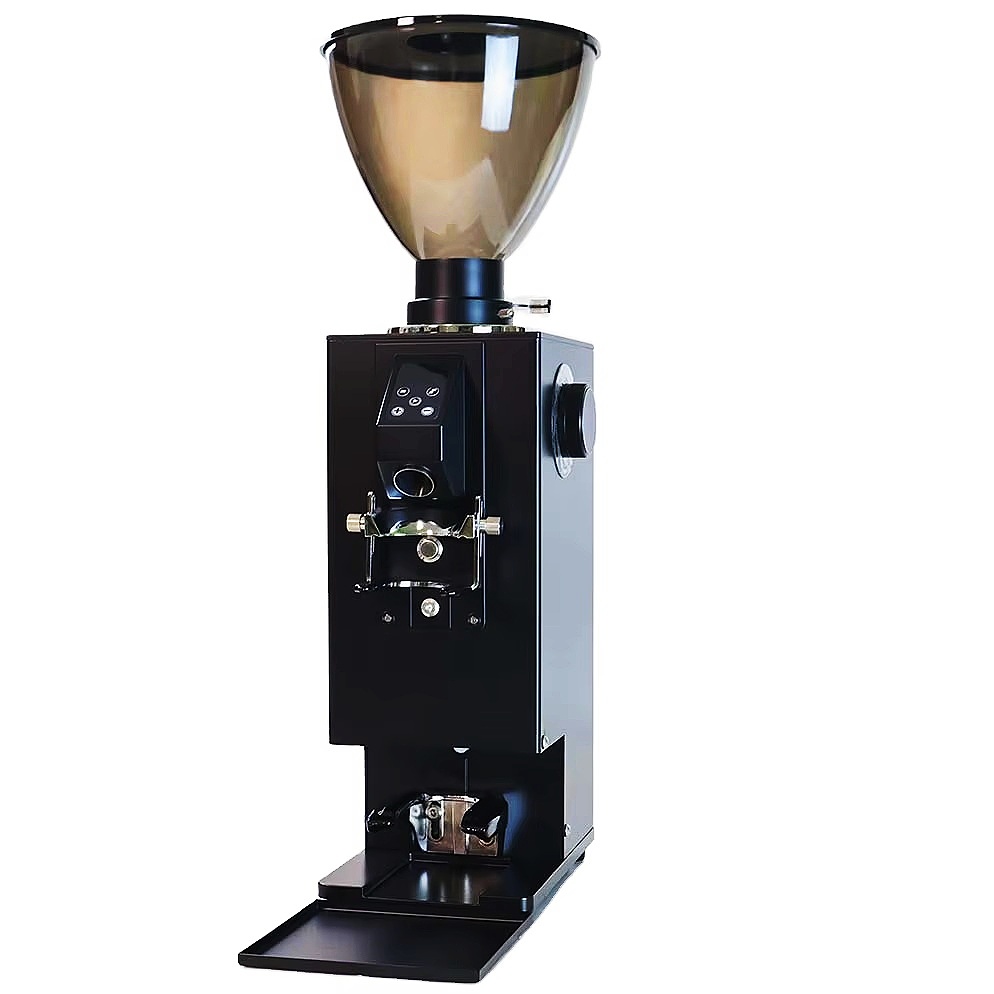
For a new coffee shop or a small bar setup, K64Y can help reduce manual grinding work and support basic espresso service. It is a practical choice when the buyer wants a professional coffee grinder to pair with a compact espresso machine, but does not need the highest output speed.
KY-MD074: 74mm Flat Burr Coffee Grinder for Small to Medium Cafes
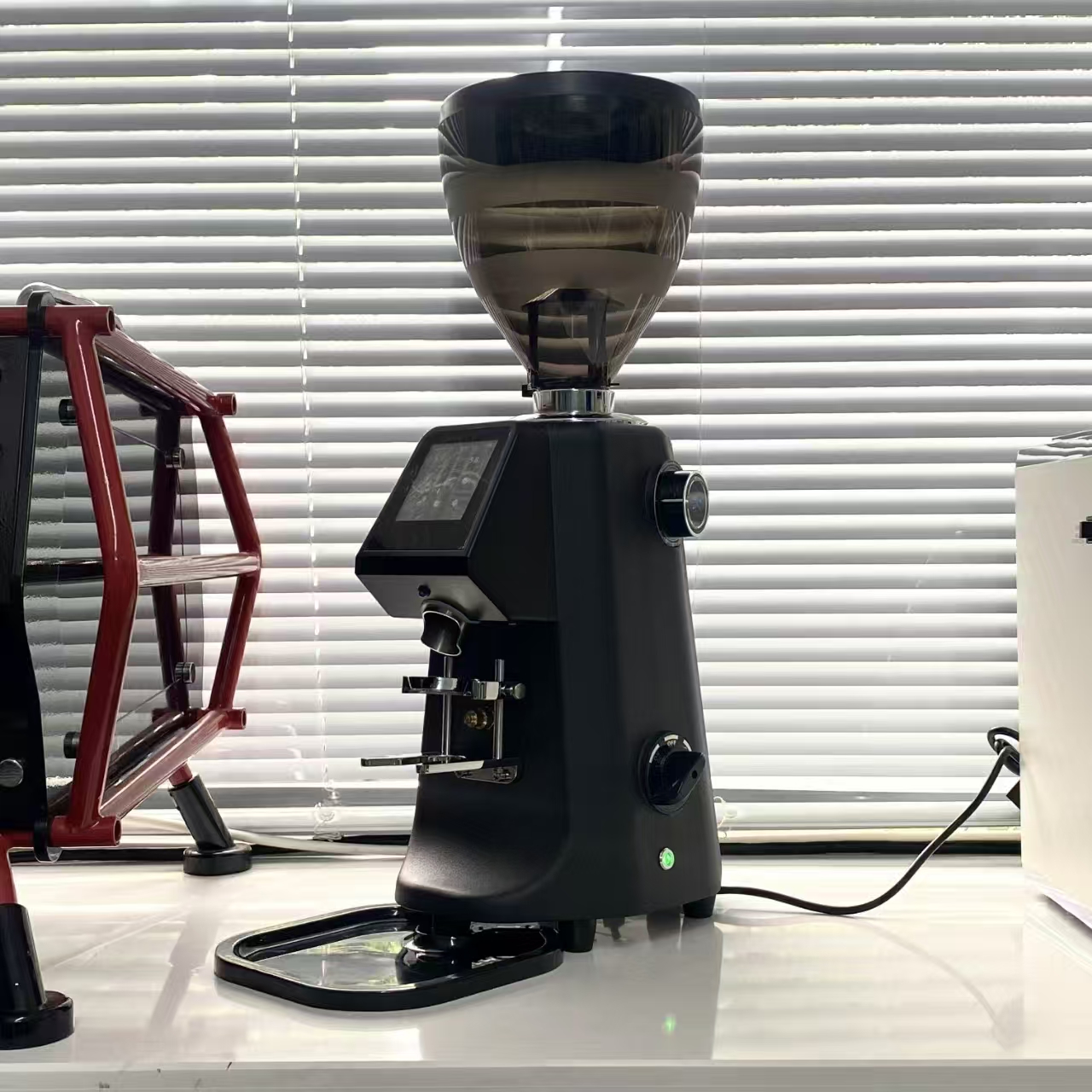
The KY-MD074 commercial coffee grinder is designed for small to medium coffee shops, roasters, and professional users who need better grind consistency in a compact size. It uses 74mm Italian imported flat burrs, a 450W motor, 4.5g/s grinding speed, a 1.2kg hopper, and both grind-by-weight and grind-by-time control.
This makes KY-MD074 a strong middle option for cafes that serve espresso and filter coffee but do not yet require the full output of an 83mm grinder. For buyers comparing budget, speed, dosing accuracy, and long-term service, KY-MD074 offers a balanced choice between compact size and commercial coffee performance.
KY-MD083: 83mm Flat Burr Commercial Coffee Grinder for Busy Espresso Bars
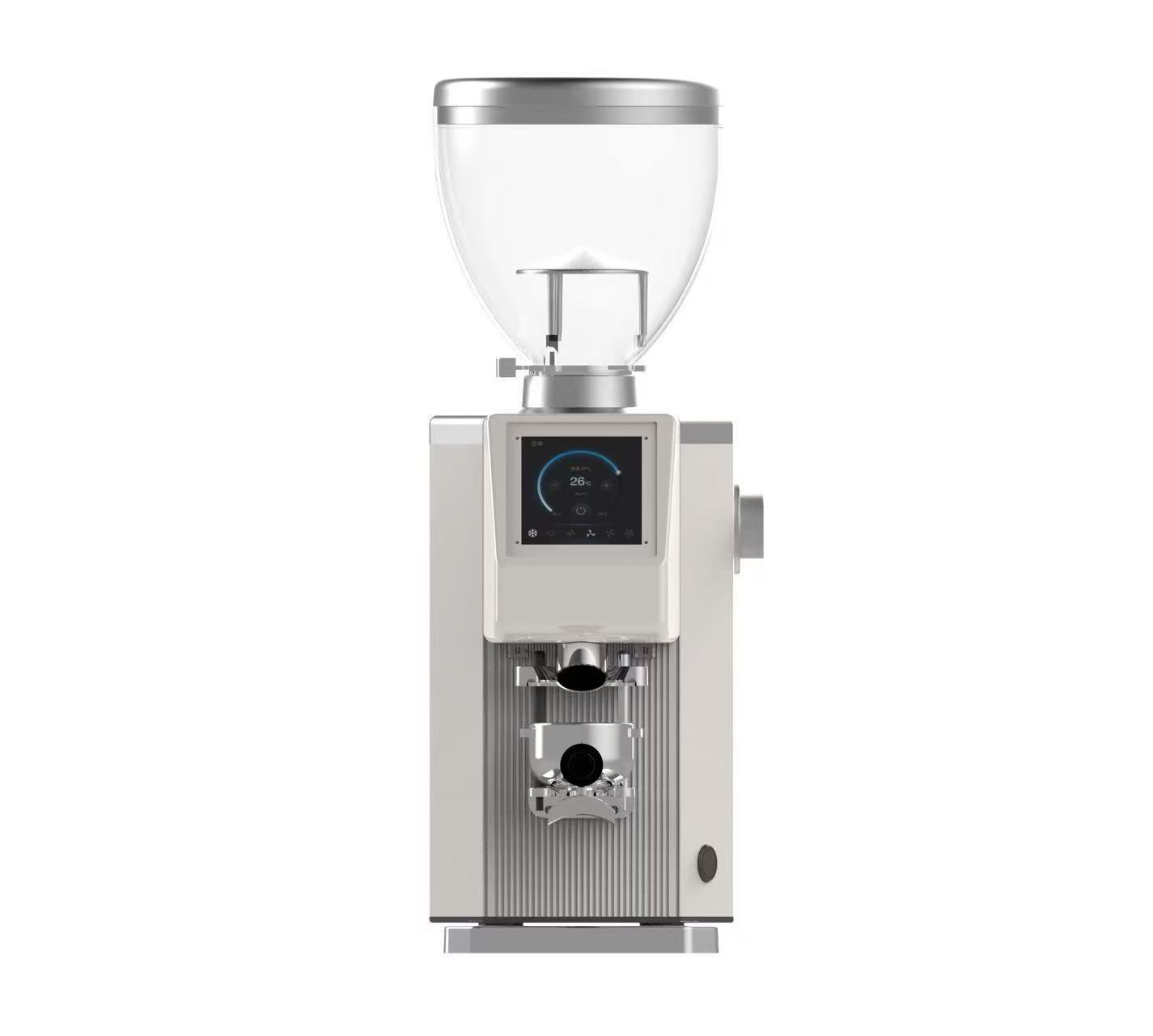
The KY-MD083 commercial coffee grinder is the best fit for busy coffee shops, espresso bars, roasters, and professional baristas who need more speed and stronger burr performance. It features 83mm flat burrs, a 600W motor, 2800 RPM, 5g/s grinding speed, a 1.2kg hopper, stepless grind size adjustment, and grind-by-weight or grind-by-time dosing.
For high-volume espresso service, KY-MD083 should be the main recommended model in this article. It directly matches the article’s focus on commercial coffee grinder performance, grind consistency, dosing accuracy, speed, and stable coffee shop workflow. When paired with a semi-automatic espresso machine, it supports repeatable extraction and efficient bar service.
How to Choose Between K64Y, KY-MD074, and KY-MD083
Choose K64Y for compact counters, office coffee bars, and light commercial coffee service. Choose KY-MD074 for small to medium cafes that need 74mm flat burr performance, weight control, and stable daily output. Choose KY-MD083 for busy espresso bars, specialty cafes, roasters, and coffee shop projects that need faster grinding speed and stronger commercial grinder performance.
Types of Commercial Coffee Grinders
Commercial Espresso Grinders
Espresso grinders are designed for fine grinding, fast dosing, and stable espresso extraction. Most cafes use commercial espresso grinders beside a semi-automatic espresso machine. These espresso grinders need to produce stable grind consistency during peak service because espresso extraction reacts quickly to changes in burr temperature, grind size, and dose.
When buyers ask, “What coffee grinders do cafes use?” the answer is usually commercial burr grinders from brands such as Bunn, Mythos, La San Marco, and other professional coffee equipment suppliers. Some cafes use Bunn grinders for batch or filter coffee, while others use espresso grinders for espresso based drinks. A Bunn grinder may be seen in hotels, offices, and high-volume coffee stations where speed and durability matter.
Flat Burr Grinders
Flat burr grinders are popular in commercial coffee because they produce more uniform particle sizes. Larger burrs, typically 65mm or larger, grind coffee faster without overheating. In the 64mm to 85mm+ range, larger burrs can generate less heat and produce a more consistent grind, helping preserve coffee flavor.
This 83mm flat burr coffee grinder is suitable for a coffee shop that wants better grind quality, stable espresso, and clear flavor presentation. Hardened steel burrs are ideal for durability in commercial coffee grinders, while titanium-coated commercial burrs may be used in some higher-end models.
Conical Burr Grinders
Conical burr grinders also have a place in commercial coffee service. Conical burrs are excellent for lower heat transfer in busy environments because many conical burr grinders run at lower RPM and generate less heat. Both flat burrs and conical burrs can produce excellent espresso when the grinder is well built and properly adjusted.
The choice depends on coffee shop demand, bar workflow, menu structure, and budget. Flat burr grinders often focus on uniformity and clarity, while conical burr grinders are valued for lower heat and certain flavor profiles. A strong commercial grinder should match the intended service rather than simply chase the most expensive model.
Allround Grinder and Industrial Grinder Options
An allround grinder is useful when a business needs one coffee grinder for espresso, filter coffee, cupping, and training. For small cafes, offices, and coffee classrooms, an allround grinder can reduce equipment cost while still supporting multiple drinks.
An industrial grinder, however, is built for much higher volume, such as large coffee production, packaged ground coffee, or factory-level processing. Most coffee shops do not need an industrial grinder. They need a reliable commercial coffee grinder that fits the bar, hopper capacity, coffee beans, and service speed.
How Long Will a Commercial Coffee Grinder Last?
Burr Life and Replacement
The service life of a commercial coffee grinder depends on burr material, daily volume, roast level, cleaning, and maintenance. Most commercial burr grinders are rated for around 500 to 1,000 kilograms of coffee before burr replacement becomes necessary. Worn burrs produce uneven particle sizes, leading to inconsistent extraction, weaker flavor clarity, and lower grind consistency.
For a coffee shop with heavy daily volume, burr inspection should be part of the maintenance plan. A 1-group espresso machine may pull 80 to 120 shots daily, and a busier bar can generate much more demand. If grinding speed slows down or espresso becomes harder to dial in, the burrs may be tired.
Daily, Weekly, and Monthly Maintenance
Daily cleaning should include wiping the exterior, emptying loose grounds, checking the hopper, and brushing the chute. Weekly cleaning with grinder cleaning tablets helps remove oil buildup from coffee beans. Monthly maintenance may involve disassembling and cleaning burrs, depending on the grinder model and coffee shop volume.
Heat affects grind consistency during busy service periods. Active cooling systems in some leading commercial grinders help prevent heat from impacting grind consistency. Even without active cooling, regular cleaning, proper airflow, and correct use can help the coffee grinder run more steadily.
How to Extend Grinder Durability
To extend durability, avoid foreign objects entering the hopper, keep the grinder in a dry area, clean the chute, and do not force adjustment when burrs are blocked. The grinder should be adjusted carefully while running or according to the machine instructions.
Investing in a high-quality commercial coffee grinder improves long-term performance efficiency. A cheap grinder may look like a budget win at first, but poor grind consistency, high retention, weak burrs, and difficult maintenance can cost more through coffee waste, service delays, and inconsistent drinks.
Common Questions About Commercial Coffee Grinders
What Is the Best Commercial Coffee Grinder?
The best commercial coffee grinder is the one that matches your coffee shop workflow, espresso machine capacity, coffee beans, menu, and daily volume. For many cafes, the best choice is a commercial grinder with large burrs, low retention, stable dose control, strong motor power, and easy maintenance.
What Coffee Grinders Do Cafes Use?
Cafes usually use commercial espresso grinders, filter grinders, or a multi grinder setup. Some coffee shops compare Bunn, Mythos, La San Marco, and other commercial coffee equipment brands. Bunn is often associated with commercial coffee brewing and bulk grinding, while espresso grinders focus on precise espresso service. In practice, many cafes buy more than one grinder to match different beans and drinks.
What Is the Best Rated Coffee Grinder?
The best rated coffee grinder depends on the review source, target use, and price range. A coffee shop should not choose only by rating. It should check burrs, motor power, grind consistency, hopper capacity, service support, dosing accuracy, and whether the grinder can hold stable performance under daily commercial coffee demand.
What Is the Most Expensive Coffee Grinder?
High-end commercial grinders can be expensive because of larger burrs, advanced dosing technology, active cooling, low retention design, and stronger build quality. Commercial grinders often range from $800 to $3,500+, while mid-range commercial grinders typically cost $1,200 to $2,000. Financing options are available for many new commercial grinders, depending on supplier and region.
Conclusion
As a B2B factory supplier, Huazell provide professional coffee machine and coffee grinder product lines for cafes, distributors, hotels, offices, and OEM/ODM projects, helping buyers build stable commercial coffee equipment solutions from espresso machine to commercial coffee grinder