


When a café owner turns on an espresso machine, and the steam boiler gauge stays at zero, rises slowly, or climbs above the safe range, the whole morning service can stall. No stable steam means no hot milk drinks, no fast hot water, and no smooth brewing and steaming workflow. The cause may be scale, low water level, a faulty pressure stat, or the wrong espresso machine boiler type for your workload. For buyers who need stable performance, Huazell provides professional dual-boiler espresso machines and commercial coffee equipment solutions for cafés, restaurants, hotels, and distributors.
An espresso machine boiler controls water temperature for brewing espresso and steam pressure for milk frothing. Single-boiler machines switch between brewing and steaming, heat exchanger machines use one steam boiler with a copper tube, while dual-boiler machines use separate boilers for better temperature control.
Boiler pressure problems are easier to understand once you know how different boiler systems work. Before replacing a machine or calling for emergency repairs, it helps to compare single-boiler, heat-exchanger, and dual-boiler designs.

What Is a Boiler in an Espresso Machine?
An espresso machine boiler is the heated chamber that prepares water for brewing and steam for milk frothing. A commercial espresso machine must manage two different temperature needs. Brewing requires controlled brewing water at the correct temperature for extraction quality, while steaming requires higher heat and pressure to steam milk quickly.
This is why the boiler system affects speed, consistency, workflow, and drink quality. If the boiler cannot maintain stable heat, the machine may produce weak steam, unstable espresso, or slow recovery after multiple drinks. For cafés, the boiler is not a hidden technical detail. It is the engine room of the whole coffee bar.
Key Features of a Stable Espresso Machine Boiler System
A reliable boiler espresso machine should support both brewing and steaming without creating long waiting times. For B2B buyers, the most important features include stable pressure, strong heating elements, safe water level control, easy maintenance access, and suitable boiler capacity for daily cup volume.
Precise Temperature Control
Precise temperature control helps the machine maintain stable brewing temperature during espresso extraction. Some machines use PID control, short for proportional integral derivative, to regulate heat more accurately. Better temperature control improves consistency and helps cafés produce repeatable espresso shots across different baristas and busy service periods.
Steam Power for Milk Drinks
For cafés that sell cappuccinos, lattes, and flat whites, steam power matters as much as espresso quality. A weak steam boiler slows service and makes it harder to steam milk with smooth texture. A stronger system supports multiple drinks, faster milk preparation, and better workflow during peak hours.
Serviceable Design for Long-Term Use
A good commercial espresso machine should be practical to maintain. Pressure stats, probes, valves, heating elements, and fittings should be accessible for service. This is especially important for distributors and café operators because downtime costs more than preventive maintenance.
Types of Espresso Machine Boiler Systems
There are three main boiler systems buyers usually compare: single boiler, heat exchanger, and dual boiler. Each system can be the right fit depending on budget, space, drink volume, and whether the user needs to brew and steam simultaneously.
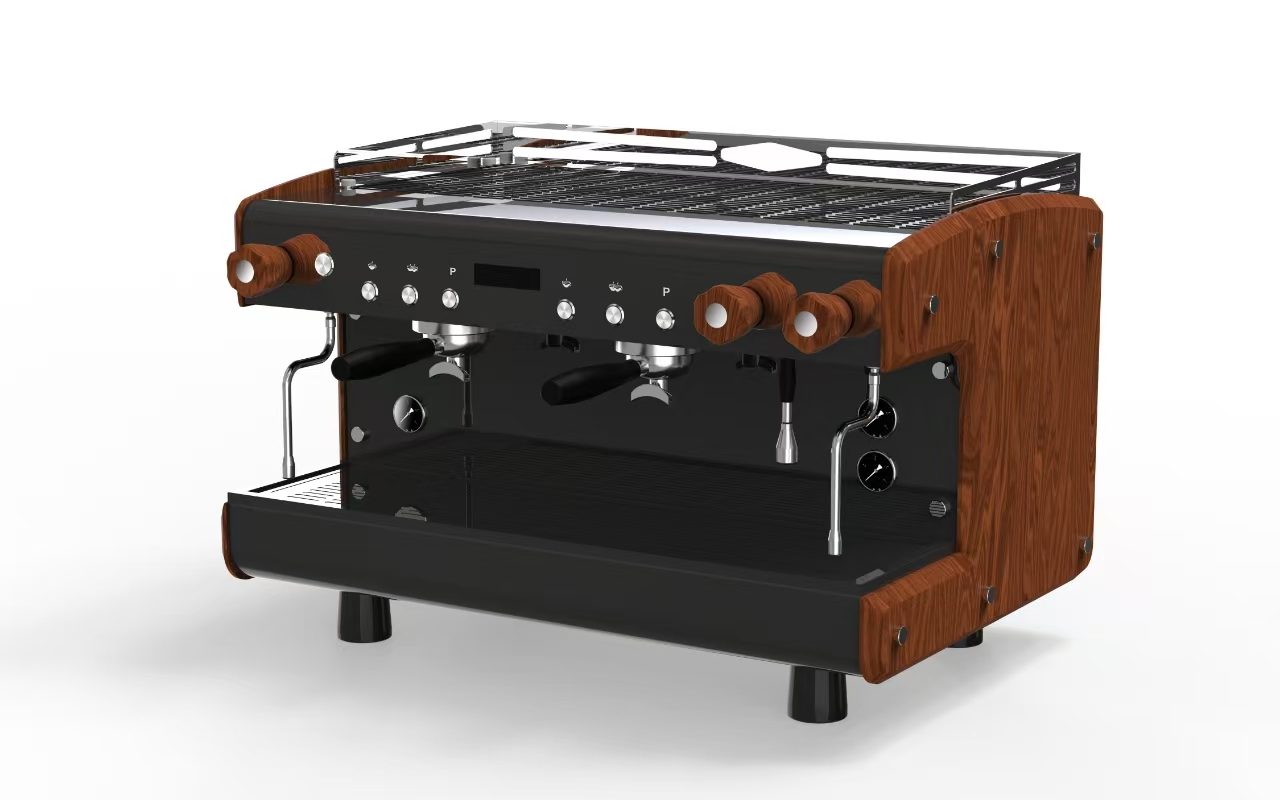
For buyers who need a commercial multi-boiler setup, the KY-229 commercial espresso machine is a suitable product to explore. It is designed with a large steam boiler and separate brew boilers to support stable brewing and steaming during busy café service. With individual temperature control, adjustable pre-infusion, an Italian rotary pump, and a professional flowmeter configuration, KY-229 is suitable for cafés, restaurants, hotels, coffee bars, and distributors looking for a reliable dual boiler espresso machine for commercial use.
Single Boiler Espresso Machine
A single boiler espresso machine uses one boiler for both brewing and steaming. Single-boiler machines heat water to one temperature for brewing espresso and then raise the temperature for steaming milk. This makes them compact and budget-friendly, but they cannot brew espresso and steam milk simultaneously.
Single boiler machines are suitable for home use, small offices, or low-volume coffee service where users mainly make straight espresso and only steam milk occasionally. The tradeoff is waiting time. A user must switch between brewing and steaming functions, then cool or heat the boiler again before the next task.
Heat Exchanger Espresso Machine
A heat exchanger system uses one large steam boiler set to steaming temperature. Brew water travels through a copper tube running inside the hot boiler. This allows heat exchanger machines to support simultaneous brewing and steaming while using only one boiler.
The main heat exchanger pros are faster workflow, lower cost than many dual boiler machines, and the ability to pull shots and steam milk at the same time. However, a heat exchanger may require temperature surfing to reach the ideal brewing temperature. This means the operator may need to flush water before extraction to stabilize the brew water.
Dual Boiler Espresso Machine
A dual boiler espresso machine uses two separate boilers: one brew boiler for espresso extraction and one steam boiler for milk frothing and hot water. This gives the machine independent temperature control for brewing and steaming, which improves precision, speed, and consistency.
Dual-boiler machines are ideal for cafés, restaurants, hotels, and professional coffee bars that need simultaneous brewing and steaming without compromising quality. A dual boiler setup can maintain precise temperatures for espresso while keeping steam available for milk drinks. This is why many commercial buyers prefer a dual-boiler espresso machine for higher-volume service.
Do You Really Need a Dual Boiler Espresso Machine?
You need a dual boiler espresso machine if your business regularly prepares milk drinks, serves multiple drinks in a row, or needs stable quality during rush hours. Dual-boiler machines allow users to brew and steam simultaneously, which improves speed and reduces waiting. They also provide more precise temperature control than many single-boiler machines.
However, a dual boiler system usually costs more, uses more electricity, and may require more internal space. For smaller budgets or limited counters, single-boiler machines or heat-exchanger machines may be enough. The right choice depends on your daily drinks, milk demand, budget, and available space.
Is a Thermoblock Better Than a Boiler?
Thermoblock machines use a heated metal block instead of a traditional boiler. They can heat quickly and save energy, which makes them useful for compact and entry-level equipment. Their fast heat-up time is attractive for light use, offices, or casual users.
For professional coffee service, traditional boiler systems often provide stronger stability, better steam capacity, and more consistent brewing and steaming. A dual boiler or heat exchanger machine is usually more suitable for repeated drinks, strong milk steaming, and long operating hours.
Why Does Boiler Pressure Get Stuck?
Boiler pressure can get stuck when the machine has a low water level, a scaled autofill probe, a failed pressure stat, scale on the heating element, or trapped air. If the gauge stays at zero, the boiler may not be heating. If pressure builds too slowly, the scale may be blocking heat transfer. If pressure rises above 2 bar, the pressure control system needs inspection.
Because boiler systems involve electricity, heat, steam, and pressure, repairs should be handled carefully. Operators can check water supply, filtration, warm-up behavior, and maintenance history, but internal repairs should be done by trained technicians.
Which Espresso Machine Has a Stainless Steel Boiler?
Many modern commercial machines use stainless steel boilers because stainless steel offers durability, corrosion resistance, and clean internal surfaces. Copper and brass are also common in espresso machine boiler design because they transfer heat well and have a long history in coffee equipment. The best choice depends on the machine structure, price, thermal design, and maintenance plan.
When comparing machines, buyers should ask the manufacturer about boiler material, boiler capacity, heating power, pressure control, spare parts, and service support. A stainless steel boiler can be a strong advantage, but the whole system must also support stable brewing and steaming in real use.
How Long Will Espresso Machine Boiler Parts Last?
Boiler parts can last for years when water quality is controlled and maintenance is regular. Heating elements, probes, valves, and pressure stats wear faster when exposed to hard water, scale, and heavy daily use. Preventive maintenance is usually cheaper than emergency repair.
For cafés, the best practice is to use filtered water, monitor pressure behavior, clean steam systems, and schedule periodic inspection. A stable boiler system protects espresso quality, steam milk performance, and long-term equipment value.
Built for B2B Coffee Equipment Buyers
Huazell supports B2B buyers with professional coffee machine and coffee grinder product lines for cafés, distributors, wholesalers, and OEM/ODM projects. Explore our espresso machine and grinder categories to build a stable, serviceable, and market-ready coffee equipment solution.