


Is a Cheap Commercial Espresso Machine Really Saving Your Business Money?
A low quotation may look attractive when a café, coffee chain, distributor, or office supplier is comparing espresso machines. However, a cheap commercial espresso machine may use lower-grade components, limited diagnostics, or an internal layout that is difficult to service. Repairs become slower, parts become harder to obtain, and drink service may stop during peak hours. Instead of looking only at the regular price, B2B buyers should calculate the complete commercial espresso machine cost, including installation, maintenance, downtime, useful life, and resale value.
The true ownership expense of commercial espresso machines includes the purchase price, freight, duties, installation, grinder and water filtration equipment, repairs, lost sales during downtime, and residual value. A reliable machine may require a larger initial investment but remain more economical over several years.
The lowest FOB price is not automatically the best offer. Compare boiler configuration, parts availability, support, and daily volume before selecting a commercial espresso machine manufacturer.

What Does a Commercial Coffee Machine Cost?
Commercial espresso machines commonly range from approximately $5,000 to more than $30,000 in retail markets, although renewed, entry-level, and factory-direct models may be lower. High-end multi-group espresso machines can exceed $20,000 because pricing is influenced by engineering quality, automation, boiler technology, durability, brand reputation, and service availability.
Total ownership expense = machine price + shipping and duties + installation + maintenance and repairs + downtime losses - resale value.
A lower regular price may exclude a commercial grinder, water filtration system, accessories, installation guidance, or service parts. When comparing La Marzocco, Nuova Simonelli, Victoria Arduino, and OEM suppliers, match specifications and support terms rather than names alone.
Where Do Hidden Equipment Costs Appear?
Repair Parts and Technician Labor
Repair expenses include more than a failed valve, pump, flowmeter, or control board. When espresso machines lack error codes, wiring diagrams, or accessible components, technicians may spend hours locating a small fault. Overseas labor and repeated service visits may cost more than the part.
Before ordering a commercial espresso machine, request service videos, electrical diagrams, error-code guidance, and a spare-parts list. Pumps, boilers, valves, group heads, flowmeters, and controls should be easy to identify and replace.
Grinder, Water Filtration, and Installation
An espresso machine does not operate alone. A suitable grinder supports consistent particle size, shot time, taste, and shot quality. One grinder may support a small menu, while cafés serving different coffees may need two grinders for house espresso and decaf. Match the grinder to volume, workflow, and barista training.
Water filtration is equally important. Scale can restrict valves, damage boilers, and shorten the life of espresso machines. Test local hardness, confirm whether the water supply is plumbed, and choose filtration before installation. North American installations often require a dedicated 208V or 240V circuit.
Downtime and Lost Coffee Shop Sales
A machine failure during the morning rush may stop espresso, cappuccino, and lattes sales, slow the bar, and generate refunds. For a busy coffee shop, lost revenue can exceed the repair bill.
Risk is lower when the commercial espresso machine has clear fault identification, stocked parts, accessible components, and support. Multi-location operators should keep essential seals, valves, and pump parts locally. Reliable espresso machines protect operation.
Which Boiler Configuration Matches Your Volume?
Group Count and Daily Volume
Group count determines how many shots baristas can prepare simultaneously. A one-group commercial espresso machine may handle up to about 50 drinks per day, while a two-group machine is commonly selected for approximately 150 to 200 drinks daily. Actual capacity also depends on menu mix, grinder speed, steam demand, staff skill, and peak-hour workflow.
More group heads do not automatically create a better setup. Buyers should match group heads to realistic volume, counter space, available power, and the number of baristas working at the same time.
Heat Exchanger, Dual-Boiler, and Multi-Boiler Systems
A heat exchanger machine allows brewing and steaming at the same time using one main boiler. A dual-boiler commercial espresso machine separates brew and steam functions, providing independent temperature control. Multi boiler espresso machines assign dedicated brew boilers to individual group heads for stronger stability at scale.
PID temperature control supports precise brew settings, while programmable pre infusion can improve extraction consistency. Buyers serving different coffees may value individual temperature control. Pressure profiling adds control, but it should support the café workflow rather than becoming an expensive feature the team rarely uses.
Semi-Automatic or Volumetric?
A semi automatic machine gives trained baristas direct control over shot extraction. Volumetric espresso machines use programmed water volumes to support consistency during busy service. Super-automatic equipment requires less training but changes the workflow and drink experience. The best commercial espresso machine is the model that matches staff capability, menu, output, and service resources.
Huazell Commercial Espresso Machines for Different Business Needs
KY-229 Two-Group Triple-Boiler Espresso Machine
The KY-229 commercial espresso machine combines a 10-liter steam boiler with two independent 1-liter brew boilers. Its T3 multi boiler system provides brewing-temperature adjustment from 88°C to 95°C and programmable pre infusion from 1 to 9 seconds.
The SUS 304 housing, copper internal pipes, Italian FOT rotary pump, and Italian GICAR flowmeters provide a clearly defined component package. With two group heads and 5,700 watts of power, the KY-229 suits higher-volume cafés requiring simultaneous production.
KY-T33 S Dual-Boiler Commercial Espresso Machine
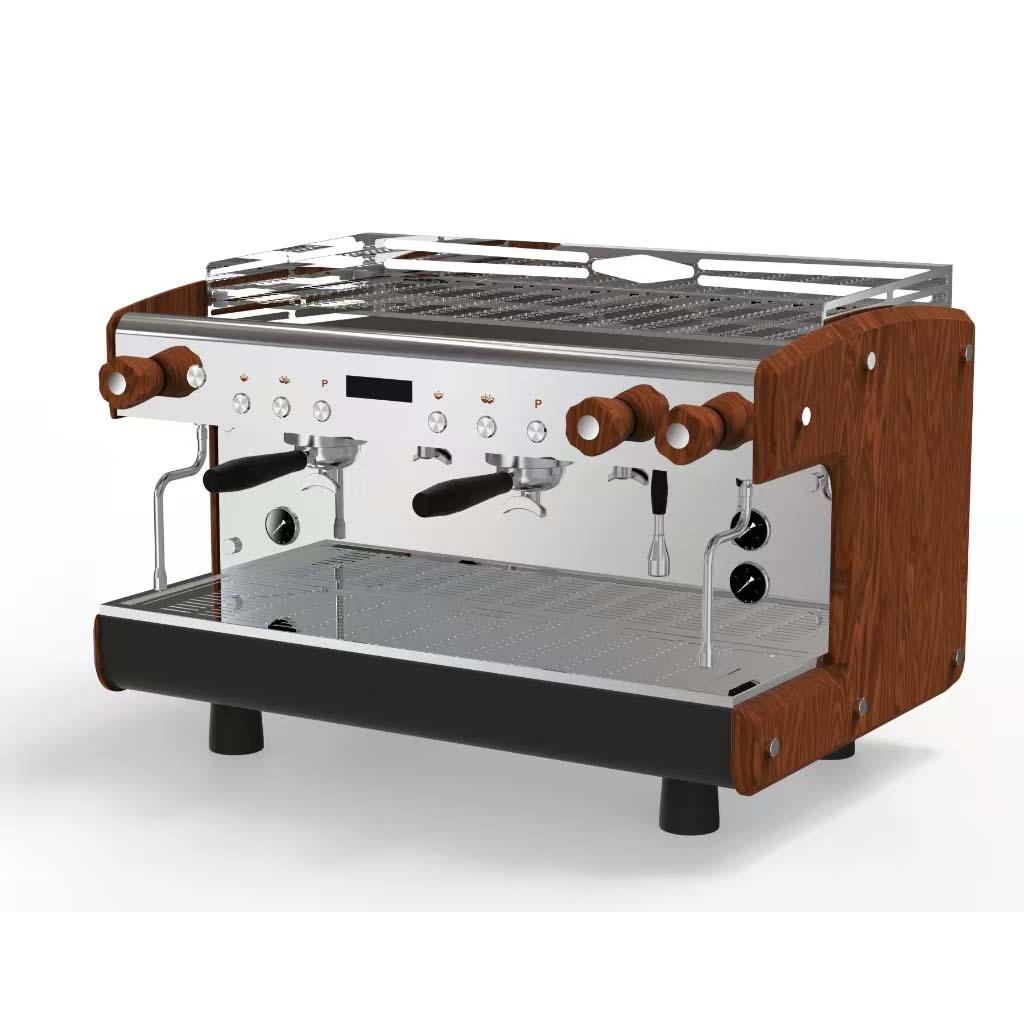
The KY-T33 S commercial espresso machine uses a 6-liter steam boiler and a 1-liter brew boiler, with individual brew temperature adjustment from 88°C to 95°C. It includes a stainless-steel body, copper piping, Italian FOT rotary pump, Italian GICAR flowmeter, and Italian ODE valves.
This semi automatic commercial espresso machine can suit cafés, restaurants, offices, and distributors balancing output, footprint, and serviceability.
JC-128 Two-Group Triple-Boiler Espresso Machine
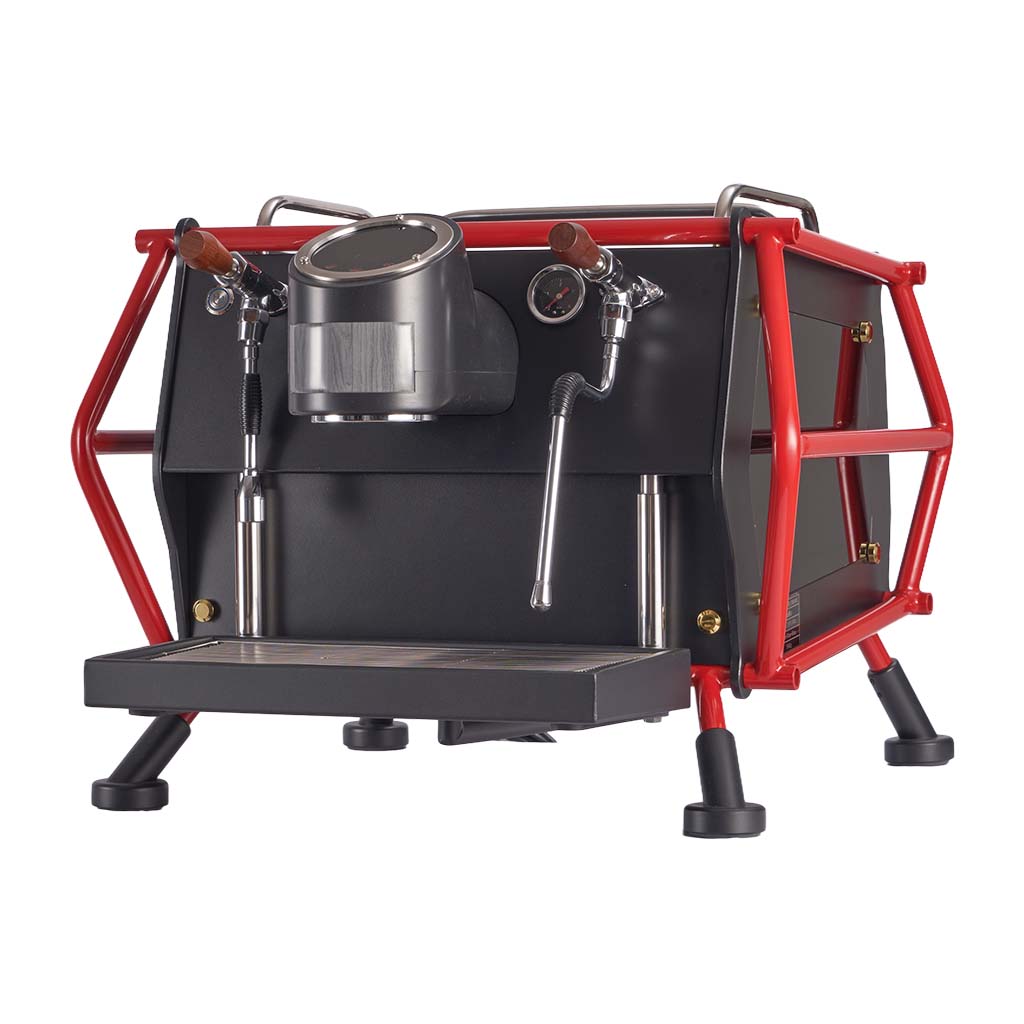
The JC-128 commercial espresso machine provides another two-group multi boiler option with a 10-liter steam boiler, two 1-liter brew boilers, T3 heating, adjustable pre infusion, and independent temperature control.
Buyers should compare its 5,700-watt requirement, group heads, installation conditions, grinder pairing, and expected peak-hour volume with the actual coffee shop workflow.
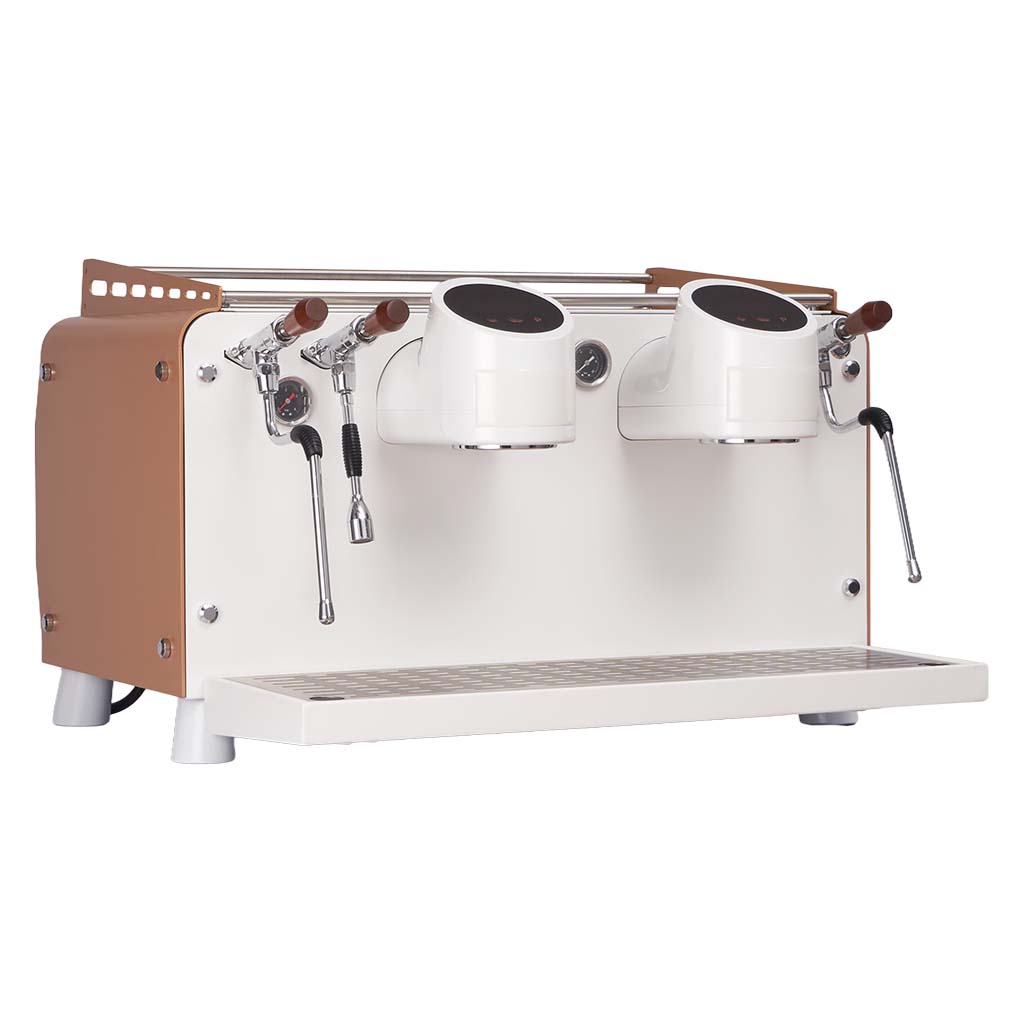
How to Choose the Best Commercial Espresso Machine
Start with daily volume, peak demand, menu complexity, group count, steam use, available space, electrical supply, water quality, and barista experience. Then compare boiler configuration, PID temperature control, pump type, grinder requirements, service access, warranty, parts availability, and supplier support.
Ask the manufacturer for a full range of specifications, maintenance schedules, service documents, and realistic replacement-part arrangements. Free consultations can be useful, but answers should be specific to the proposed model. The best commercial espresso machine for business is not necessarily the luxury model or the lowest-priced machine. It is the machine that can operate reliably, match the team’s workflow, and protect revenue over its working life.
Conclusion
Commercial espresso machines should be evaluated as long-term production equipment. Comparing price, grinder and filtration needs, reliability, boiler design, group heads, support, useful life, and resale value helps B2B buyers select espresso machines that protect both the budget and the customer experience.
Huazell supports B2B buyers with professional coffee machine and coffee grinder product lines for cafés, distributors, wholesalers, and OEM/ODM projects. Explore our espresso machine and grinder categories to build a stable, serviceable, and market-ready coffee equipment solution.