




A small café may have only one barista and a limited counter, yet several milk-drink orders can still arrive within a few minutes. The barista needs to extract espresso, prepare steam, serve hot water, manage the grinder, and reset the station for the next order. If the coffee machine cannot support that sequence efficiently, customers wait longer and the operator may struggle to keep recipes consistent during the busiest part of the day. The practical question is whether a single group coffee machine can handle this workload without moving immediately to a larger two-group platform.
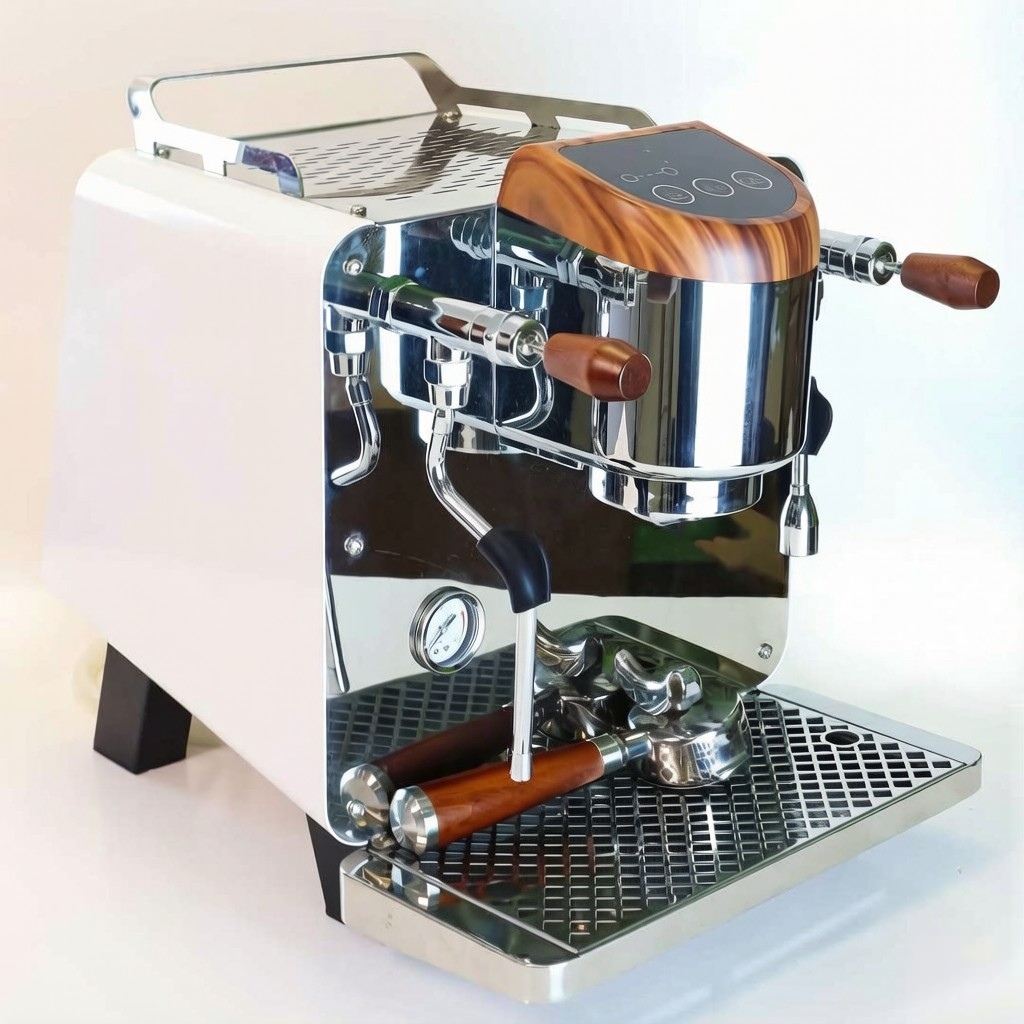
The Huazell KY-A1 addresses this application with a 6 L heat-exchanger structure, adjustable 88-95°C brew temperature, 1-9 second pre-infusion, a commercial vibration pump, and a single-group format. Rated at 2150 W and measuring 47.8 × 50 × 45.8 cm, it is positioned for small cafés, hotel and restaurant counters, office coffee points, and other lower- to medium-peak settings that need espresso and milk-drink service in a controlled footprint.
Why Do Small Cafés Lose Speed When Espresso and Milk Orders Arrive Together?
Coffee service is rarely distributed evenly throughout the day. A small shop may sell a modest number of drinks overall but receive ten or more orders during a short breakfast or lunch rush. Several of those drinks may require two espresso shots and steamed milk. Daily cup volume alone therefore does not describe the pressure placed on the machine.
Espresso extraction and milk steaming also require different operating conditions. Brew water needs controlled temperature and flow through the coffee bed, while the steam wand needs enough heat and pressure to texture milk. If the equipment cannot manage these functions in a practical sequence, the barista may need to pause between brewing and steaming or wait for recovery.
The machine is only one part of the workflow. Grinder speed, dosing, tamping, milk preparation, cup placement, payment, and cleaning can all become bottlenecks. A larger espresso machine will not automatically make service faster if the counter is poorly organized or only one person is preparing every drink.
This is why buyers should examine peak demand instead of asking only how many cups a machine can make per day. Record the highest number of drinks sold in 15 and 30 minutes, the percentage of milk drinks, and the number of shots used in each recipe. That information is more useful when deciding whether a one group coffee machine is suitable.
How Does a Heat Exchanger Coffee Machine Support Brewing and Steaming?
A heat exchanger coffee machine uses a heat-exchange circuit to prepare brew water while the main thermal system supports steam production. This architecture is designed to make espresso extraction and steam operation part of the same commercial workflow. It is different from a basic single-boiler system that may need to move between brew and steam conditions.
For a small café, the value of the heat exchanger is not simply its capacity on a specification sheet. Its purpose is to reduce unnecessary interruption when the barista moves from pulling espresso to steaming milk. The operator can organize the drink sequence more effectively, especially when several cappuccinos, lattes, or flat whites are ordered together.
A heat exchanger espresso machine is still semi-automatic equipment. It does not control grind size, coffee dose, distribution, tamping, extraction time, or milk texture for the barista. The operator must establish recipes and monitor results. Water quality and routine maintenance also affect temperature behavior, flow, valves, and the internal water circuit.
Which KY-A1 Features Support Small Commercial Coffee Service?
The KY-A1 combines a single brewing group with a 6 L heat-exchanger structure. It is a barista-operated semi automatic espresso coffee machine intended for commercial or hospitality use where a full-size multi-group platform may require more space, power, and investment than the project needs.
The current KY-A1 platform specifications include:
| Specification | KY-A1 Configuration | Application Relevance |
|---|---|---|
| Thermal structure | 6 L heat exchanger | Supports espresso and steam workflow from one commercial platform |
| Brew temperature | Adjustable from 88°C to 95°C | Gives the operator a working range for recipe testing with different coffees |
| Pre-infusion | Adjustable from 1 to 9 seconds | Adds control over initial coffee-bed saturation |
| Pump | Commercial vibration pump | Provides the pumping system for the single-group configuration |
| Flowmeter | Italian GICAR flowmeter | Supports measured water delivery within the machine system |
| Valves | Italian ODE solenoid and two-way/three-way valves | Form part of the machine's water-control system |
| Internal piping | Copper pipes | Used in the internal hydraulic and thermal circuit |
| Housing | SUS304 stainless steel with sheet-metal construction | Provides a commercial exterior suitable for regular cleaning |
| Rated power | 2150 W | Must be matched with the site's electrical supply |
| Machine size | 47.8 × 50 × 45.8 cm | Helps buyers plan a space-limited counter |
| Net weight | Approximately 30 kg | Requires a stable counter and suitable installation planning |
Adjustable Brew Temperature
An espresso machine with temperature control gives the café a practical starting point for different roast profiles and recipes. The KY-A1 allows the brew temperature to be set from 88°C to 95°C. A darker roast may need a different setting from a lighter roast, but there is no universal number that guarantees the best extraction.
Temperature should be adjusted together with grind size, dose, beverage yield, extraction time, water, and taste. The control is valuable because it provides flexibility; it does not replace recipe development or barista training.
Adjustable Pre-Infusion
The 1-9 second pre-infusion setting allows the operator to control the initial wetting stage before the main extraction. This can help the café test how different coffees respond before full brewing pressure is applied.
Longer pre-infusion is not automatically better. The correct setting depends on the coffee, grinder, basket, dose, and target flavor. The feature should therefore be presented as an adjustable tool rather than a fixed performance claim.
Commercial Components and Construction
The current KY-A1 parameter sheet specifies a commercial vibration pump, an Italian GICAR flowmeter, and Italian ODE solenoid and two-way/three-way valves. Internal copper pipes form part of the water and heat circuit, while the SUS304 stainless-steel housing provides a practical commercial surface around the group, steam area, and drip tray.
These components help define the machine's configuration, but the final sales contract should still identify the exact version supplied. Voltage, plug, accessories, finish, valve configuration, and any OEM requirements should be confirmed in the quotation before production.
What Is the Difference Between a Heat Exchanger and a Dual Boiler Coffee Machine?
Heat exchanger and dual boiler machines can both be considered for cafés that serve espresso and milk drinks, but they do not use the same thermal architecture.
A heat exchanger espresso machine uses a heat-exchange circuit within its thermal system to prepare brew water while maintaining steam capability. A dual boiler machine separates brewing and steam production into two dedicated boilers. This gives the two designs different layouts, controls, service considerations, power requirements, and price positions.
The correct choice depends on the project. A buyer may prefer a dual boiler when independent brew and steam boilers are a defined requirement. Another buyer may choose a heat exchanger coffee machine when the single-group format, 2150 W rating, physical size, and overall equipment plan better match the site.
Boiler design is only one part of the decision. Pump configuration, group count, grinder capacity, workflow, maintenance support, and water treatment also affect daily operation.
The KY-A1 should therefore be positioned clearly as a single-group heat exchanger model. It is not part of Huazell's dual-boiler range, and it should not be promoted with dual-boiler specifications that belong to other machines.
Is a Single Group Coffee Machine Enough for a Small Café?
A single group coffee machine can be appropriate when one barista prepares drinks, counter space is limited, and peak demand remains within a lower to medium range. It provides one espresso working position, which may be enough for an owner-operated shop or a hospitality counter where coffee is important but not the only product being served.
Relevant KY-A1 applications can include:
- Small cafés and coffee studios
- Bakery and dessert-shop coffee counters
- Hotel breakfast areas, lounges, and bars
- Restaurant espresso and after-dinner coffee service
- Office coffee corners and client-facing meeting areas
- Showrooms and retail hospitality counters
In these settings, an espresso machine for a small coffee shop must balance more than output. Available counter depth, electrical capacity, water and drainage planning, grinder placement, noise, appearance, staff skill, and local service all matter.
The KY-A1 should not be described as a replacement for a high-throughput two-group commercial machine. A single group can provide only one brewing work position at a time. If two baristas need to pull shots continuously during a long rush, or if the queue remains heavy for several hours, a two-group or multi-boiler platform deserves consideration.
A small commercial espresso machine is most effective when it is selected from real order data. If the café serves many milk drinks but only experiences short, manageable peaks, the heat-exchanger structure may offer a useful balance. If the business expects sustained high volume from launch, choosing a larger machine early may prevent another equipment change later.
What Should Buyers Check Before Ordering a Small Commercial Espresso Machine?
Start by creating a simple demand profile. Count the highest number of drinks served in 15 and 30 minutes. Separate espresso-only drinks from milk drinks, and note whether each beverage uses one or two shots. Also identify whether one or two people will operate the coffee station.
Then review the installation and commercial details:
- Machine and workstation size: The KY-A1 measures 47.8 × 50 × 45.8 cm, but the complete station also needs space for the grinder, tamper, knock box, scales, milk, cups, and cleaning tools. Leave access for ventilation and maintenance.
- Electrical supply: The rated power is 2150 W. A qualified electrician should confirm voltage, frequency, plug, socket, breaker, cable, grounding, and applicable local standards.
- Water quality: Use suitable treated water and follow the installation requirements for the delivered machine. Scale can affect heating surfaces, valves, pipes, and flow measurement.
- Water and drainage connections: Confirm the required connection arrangement before preparing the counter. Do not assume that every regional version uses the same installation method.
- Peak service capacity: Compare the single group with the busiest order period, milk-drink percentage, grinder output, and barista speed.
- Confirmed configuration: Ask the quotation to list the pump, flowmeter, valves, voltage, plug, accessories, exterior finish, and packaging.
- Cleaning and maintenance: Plan daily group cleaning, steam-wand purging and wiping, drip-tray cleaning, and removal of coffee and milk residue. Follow the approved maintenance instructions.
- Service and spare parts: Establish who will install and maintain the machine in the destination market. Ask how technical questions, replacement parts, and after-sales cases will be handled.
- OEM/ODM requirements: Confirm logo, color, panel, packaging, voltage, plug, sample process, lead time, and MOQ before approving the order.
Price comparisons should use the same configuration and service scope. A lower quotation may exclude accessories, customized packaging, selected components, spare parts, or local technical support. Buyers should compare what is actually included rather than comparing only the headline price.
What Do Buyers Commonly Ask About the KY-A1?
Is the KY-A1 a single group coffee machine?
Yes. The KY-A1 has one brewing group and is designed as a barista-operated, semi-automatic platform. It is intended for focused commercial and hospitality service rather than two-barista simultaneous brewing.
Can the KY-A1 brew espresso and steam milk in the same workflow?
Its heat-exchanger structure is designed to support espresso and steam operation as part of the same service workflow. Actual drink speed depends on the recipe, steam demand, grinder, operator, and order pattern.
Is the KY-A1 a dual boiler coffee machine?
No. The KY-A1 is a heat exchanger espresso machine. Huazell also develops dual- and multi-boiler machines, but those models use different boiler architectures and specifications.
What is the KY-A1 brew-temperature range?
The current specification lists adjustable brew temperature from 88°C to 95°C. The correct setting should be established through recipe testing rather than selected by roast label alone.
How much counter space does the KY-A1 require?
The machine measures 47.8 × 50 × 45.8 cm. Buyers must also allow space for the grinder, knock box, tamping area, milk preparation, cups, ventilation, plumbing, and service access.
Is the KY-A1 suitable for a busy coffee shop?
It is better positioned for lower- to medium-peak, single-group service. A business with sustained high demand or two baristas who need separate brewing positions should compare larger commercial machines.
Can Huazell customize the KY-A1?
Huazell can discuss OEM/ODM requirements such as logo, exterior color, panels, packaging, voltage, and plug. Availability, pricing, lead time, and MOQ depend on the selected project and must be confirmed before ordering.
Why Work with Huazell as Your Coffee Machine Manufacturer?
Huazell is a professional coffee equipment brand developed by Foshan KaYu for the international market. Based in Foshan, Guangdong, Huazell focuses on the research and development, manufacturing, and customization of commercial coffee equipment.
The main product range includes commercial semi-automatic coffee machines, heat exchanger models, dual- and multi-boiler espresso machines, and commercial coffee grinders. Buyers can therefore discuss a single-group coffee machine for a small café or compare higher-capacity platforms when the intended workload requires more groups or independent boilers.
Huazell's capabilities include product development, production, quality inspection, OEM/ODM support, and project communication. Customization may include logos, colors, exterior panels, packaging, voltage, plugs, and other agreed details. Every option remains subject to the selected model, technical feasibility, quotation, and MOQ.
For buyers evaluating the KY-A1, the decision should begin with the service problem. Choose this coffee machine for business use when one brewing group, a 6 L heat-exchanger structure, adjustable brewing controls, and a moderate footprint match verified demand. If the café needs two baristas to brew continuously, compare a larger two-group machine instead. Clear capacity planning and a detailed quotation are the most reliable way to select the right Huazell platform.
Explore Huazell's commercial coffee machine range or contact the Huazell team to confirm the KY-A1 configuration for your market and application.