


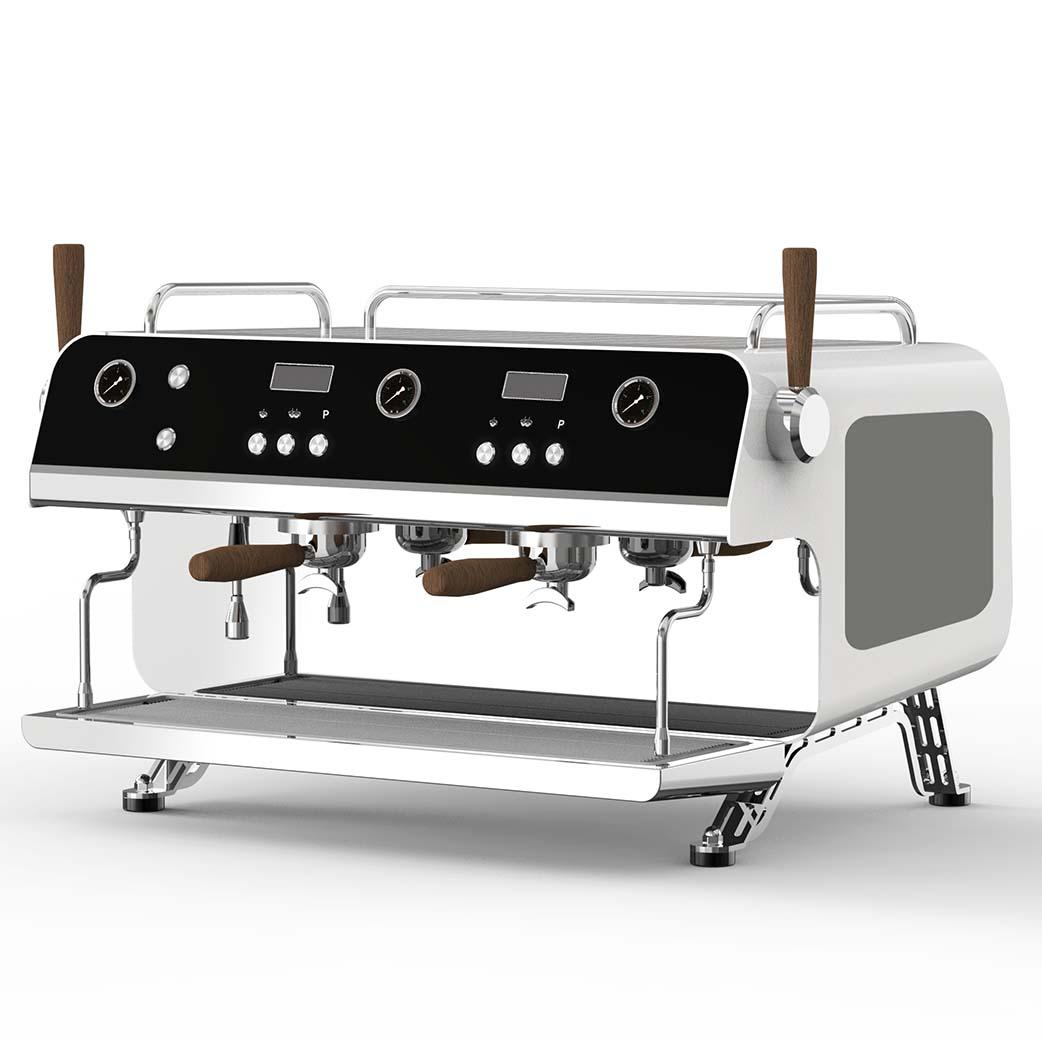
Can a 2 Group Triple Boiler Coffee Machine Keep Espresso Consistent During Peak Hours?
During a café rush, both group heads may pull espresso shots while the steam wands run continuously. If brewing and steam compete for heat, recovery slows, temperatures fluctuate, and baristas struggle to repeat the same shot. The challenge grows when two coffees need different settings. The Huazell KY-718 2 group triple boiler coffee machine separates brewing from steam production and gives each group independent controls, helping maintain quality, output, and workflow.
A two group espresso machine with three boilers uses two dedicated brew boilers and one separate steam boiler. The KY-718 combines two 0.8L brew boilers, a 10L steam boiler, independent 88–95°C temperature settings, adjustable pre-infusion, and programmable shot volumes for stable commercial service.
Boiler quantity alone does not define a good commercial espresso machine. Buyers should also examine group control, steam capacity, volumetric accuracy, installation, and peak-hour demand.

Why Does Espresso Quality Become Inconsistent During Busy Café Service?
A commercial espresso machine faces several loads at once. Both group heads may extract while baristas steam milk and dispense hot water. A shared heating system can struggle to maintain the different temperatures required for espresso and milk steaming.
A house blend and a lighter roast may need different temperatures, pre-infusion times, grinder settings, and shot volumes. If both groups share one setting, baristas lose flexibility. Manual stopping can also cause volume differences. Stable thermal systems and programmable controls therefore matter as much as the number of group heads.
What Is a 2 Group Espresso Machine?
A 2 group espresso machine has two group heads that extract simultaneously. It lets two baristas work side by side or one operator manage several espresso shots. This format suits cafés, restaurants, hotels, and bakeries because it balances commercial output with practical counter space.
A one-group espresso machine may suit a lower-volume site, while a three group machine adds capacity for busy locations. Drink-count estimates vary with menu and staff practice, so buyers should assess peak orders. For many cafés, a two group machine is the middle ground between one group head and a larger three group setup.
How Does the KY-718 Triple Boiler System Solve the Problem?
The KY-718 commercial espresso machine uses two 0.8L brew boilers and one 10L steam boiler. Each group has its own thermal circuit, while steam and hot water are supplied separately. This supports simultaneous extraction and steaming without one boiler switching between different temperatures.
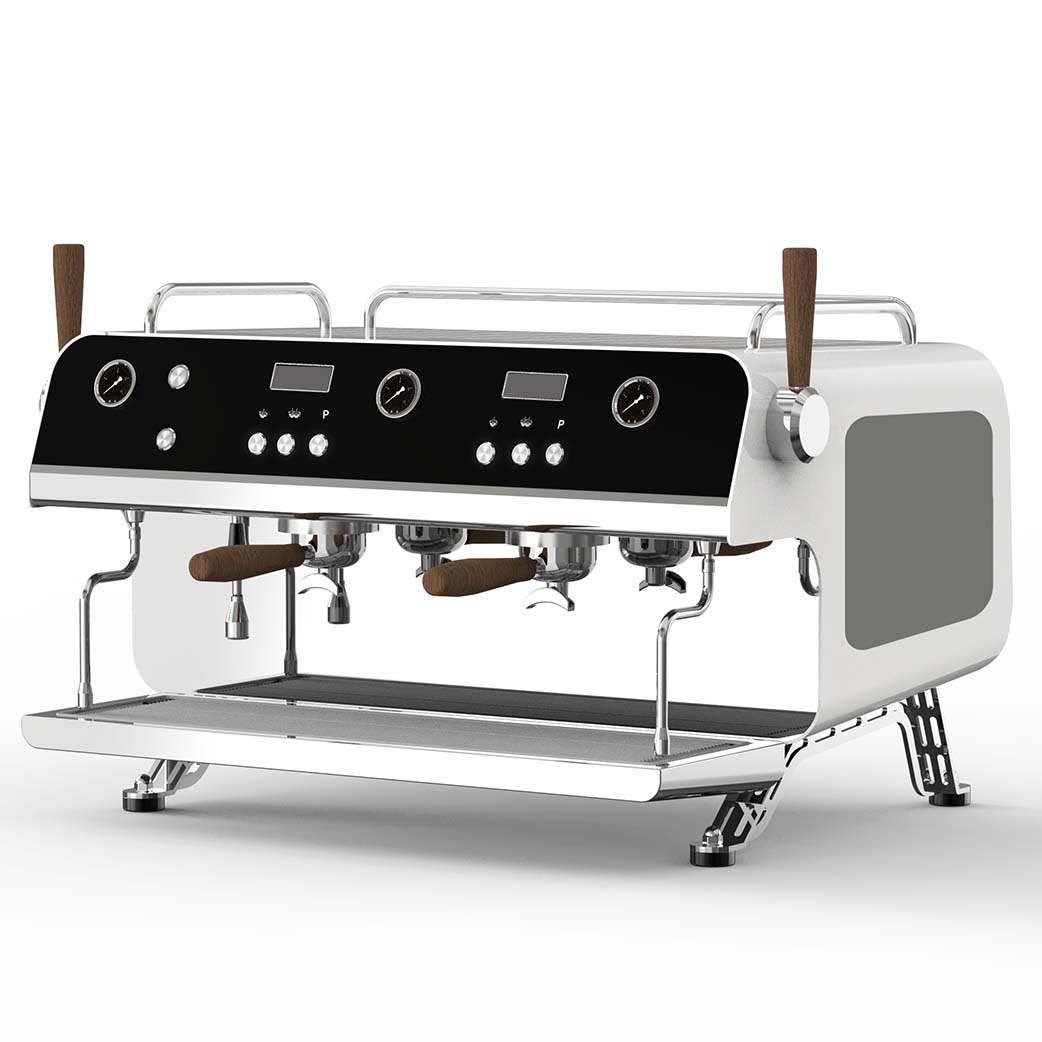
A preheating pipeline and T3 heating system prepare incoming water before it reaches the brew circuit, reducing sudden thermal change during repeated service. Commercial boilers and a rotary pump also make the espresso machine more suitable for high-volume work than compact semi automatic equipment.
How Does the KY-718 Control Two Espresso Recipes?
Independent Temperature and Pre-Infusion Settings
Both group heads can be set independently from 88°C to 95°C. A café can assign one group to its regular espresso and the other to a different coffee. Pre-infusion is adjustable from 1 to 9 seconds, with controls for water, extraction volume, and compensation. Baristas can test recipes instead of using one fixed program.
Programmable Shot Volumes and Flow Measurement
Programmable single- and double-shot buttons reduce manual stopping. Italian GICAR flowmeters measure water delivery, while flow calibration supports repeatable settings. Grinding, dose, and tamping still affect quality, but programmable output removes one variable when two baristas handle multiple orders.
Separate Displays and Independent Group Operation
The commercial espresso machine provides separate group controls and displays extraction time, temperature, and pressure. Each brew system can be switched independently. During quieter periods, one group can remain off; during cleaning, the other may stay available under normal procedures.
10L Steam Boiler for Milk-Based Drinks
The 10L boiler supplies two steam wands for milk preparation. This helps cafés where milk steaming becomes the workflow bottleneck. The separate steam system lets espresso extraction continue while baristas prepare milk drinks.
Is the KY-718 Suitable for Your Coffee Business?
The KY-718 espresso machine suits medium- to high-volume cafés, restaurants, hotels, bakeries, chains, and equipment distributors. It is relevant when two baristas work together, both group heads run during rushes, or the menu includes different espresso recipes.
Before ordering this semi automatic commercial espresso machine, confirm its 5700W power, counter space, water inlet, drainage, voltage, and installation rules. Filtered water and scale management protect the boilers, valves, flowmeters, pipes, and pump. A commercial grinder is also essential for stable shot quality.
KY-718 vs. KY-229: Which 2 Group Triple Boiler Coffee Machine Should You Choose?
| Comparison | KY-718 | KY-229 |
|---|---|---|
| Group Heads | 2 groups | 2 groups |
| Boiler System | 10L steam boiler + two 0.8L brew boilers | 10L steam boiler + two 1L brew boilers |
| Rated Power | 5700W | 5700W |
| Temperature Control | Independent 88–95°C control for each group | Independent 88–95°C control for each group |
| Pre-Infusion | 1–9 seconds, with documented water-volume and compensation settings | 1–9 seconds according to the available specification sheet |
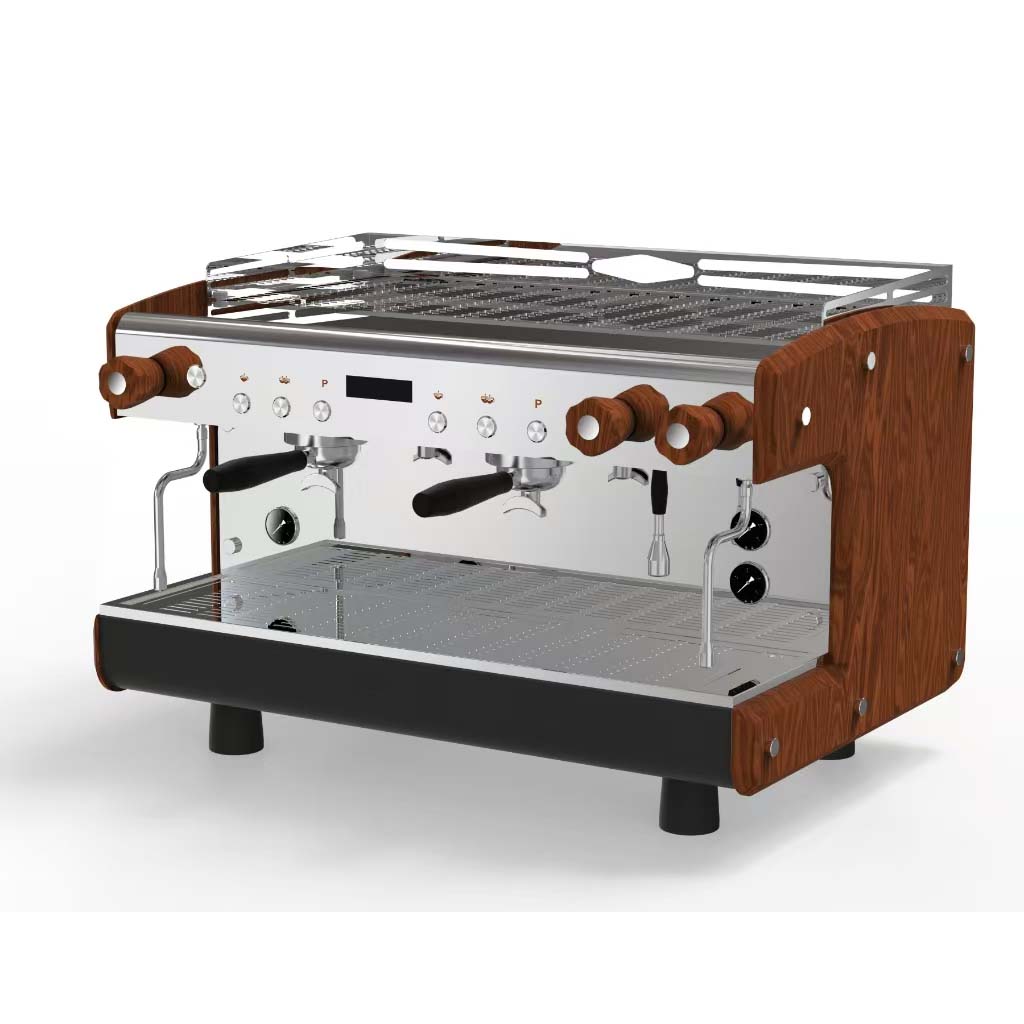
| Documented Highlights | Programmable volumes, flow calibration, independent group operation, status displays, and anti-scald steam wands | Larger 1L brew boilers, classic wood-finish side panels, and clearly documented dimensions and weight |
| Recommended For | Cafés prioritizing detailed operating control and multiple espresso workflows | Buyers prioritizing larger brew boilers and a traditional commercial design |
Both machines provide two-group operation, three boilers, independent temperature settings, and 5700W rated power. The KY-718 places greater emphasis on documented programmable controls, flow calibration, and multi-recipe workflow, while the KY-229 offers larger 1L brew boilers and a more traditional wood-panel appearance. These differences describe the features highlighted in the available product documents and should not be interpreted as proof that either model lacks functions not listed in its specification sheet.
Buyers who prefer larger 1L brew boilers and a more traditional wood-panel design can also compare the KY-229 two group triple boiler coffee machine .
Should You Choose a Two Group or Three Group Machine?
A three group machine may suit sustained demand with enough space, power, and staff. However, a third group does not make drinks faster if grinding, milk steaming, or assembly is the limiting step. A two group espresso machine is often the efficient investment when two baristas cover busy periods.
Compare peak orders, menu mix, staff, budget, and growth. The best 2 group espresso machine is the one whose boiler capacity, group controls, steam output, and installation needs match the business.
Why Choose Huazell as Your Coffee Machine Manufacturer?
Huazell is a coffee equipment Manufacturer, Supplier, and Wholesaler serving cafés, importers, distributors, hospitality projects, and private-label brands. Its range includes commercial espresso machines, semi automatic coffee machines, and commercial grinders.
Huazell supports Customizable OEM and ODM projects involving branding, exterior design, electrical specifications, packaging, and documents. Multi-boiler systems, stainless-steel construction, imported components, and model-selection support help buyers match equipment to their market and workflow.
Conclusion
The KY-718 combines two independently controlled group heads, three boilers, programmable extraction, and strong steam capacity. For cafés and B2B buyers seeking consistent peak-hour espresso output, it offers a practical balance of recipe flexibility, commercial performance, and dual-barista efficiency.