



When a coffee shop enters its morning rush, two baristas may need to pull espresso shots while preparing lattes and cappuccinos. If the espresso machine cannot maintain brewing temperature and steam output, the queue grows, espresso extraction becomes inconsistent, and the extra group head does not improve the workflow as expected.
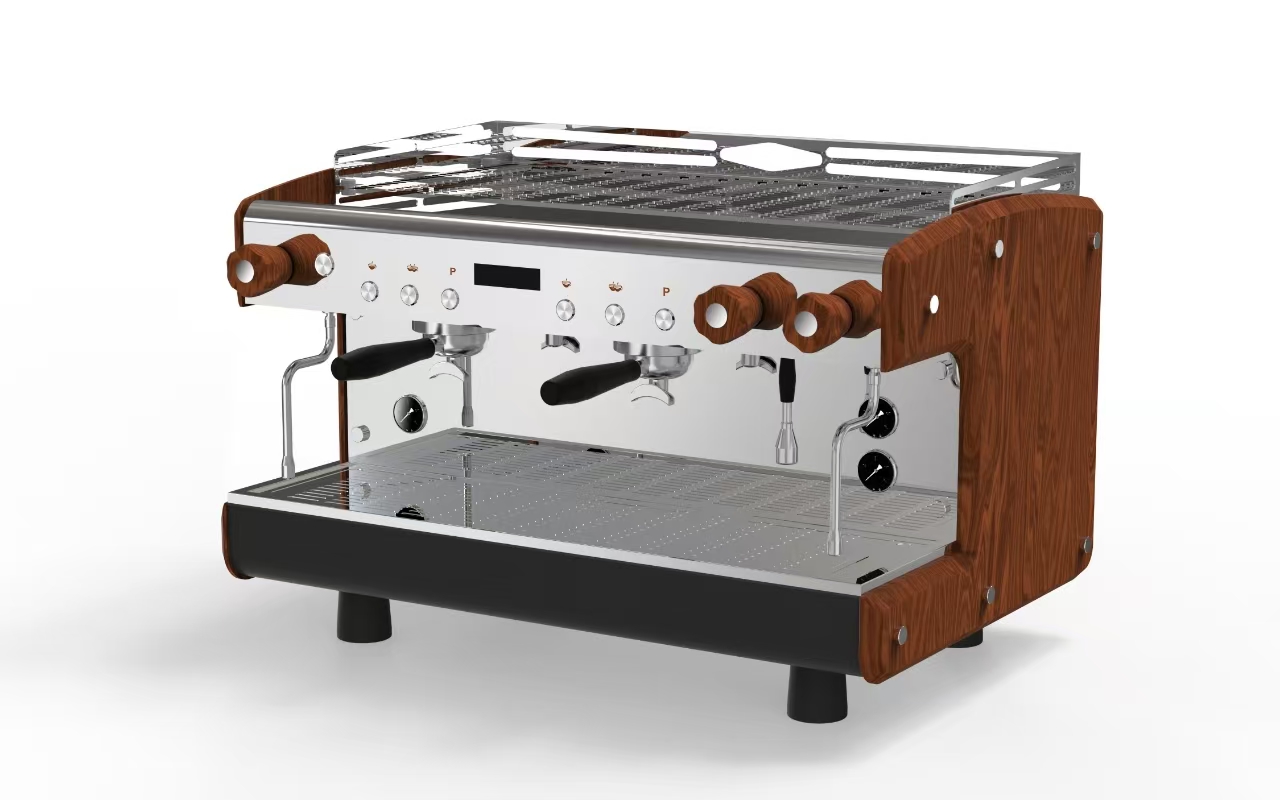
The KY-229 two group espresso machine addresses this problem with two independent 1L brew boilers, a separate 10L steam boiler, two group heads and individual temperature control. This structure supports simultaneous brewing and milk steaming, helping busy cafés maintain better temperature stability and more consistent service during concentrated demand.

Why Do Commercial Espresso Machines Slow Down During Peak Hours?
Commercial espresso machines must perform several tasks at once. They supply brew water, generate steam, refill boilers and support repeated espresso drinks. When these functions depend on a shared thermal system, brewing and steaming can compete for heat.
Cold replacement water can also affect boiler recovery. Repeated milk steaming may reduce available steam, while back-to-back espresso shots place additional demand on the brewing circuit. The result can be slower service and changing drink quality.
A larger espresso machine is not automatically the answer. The key factor is how its boiler, pump, flowmeters, heating system and group heads manage the workload.
What Is a Two Group Espresso Machine?
A two group espresso machine has two brewing groups that can operate at the same time. This lets two baristas work together or allows one barista to prepare several shots during a service rush.
This group espresso machine format is commonly selected for cafés, restaurants, hotels and bakeries. Compared with a single group espresso machine, it provides greater brewing capacity without requiring the counter space of most three group machines.
However, two group commercial espresso machines can use different boiler designs. Some share one thermal system, while a multi-boiler group espresso machine separates brewing and steam production for stronger control.
How Does the KY-229 Triple Boiler System Improve Workflow?
The KY-229 uses three boilers: two independent 1L brew boilers and one 10L steam boiler. Each brewing group therefore has its own heat source, while the larger boiler supplies steam for milk drinks.
This separation allows the commercial espresso machine to brew and steam simultaneously. It also reduces the need for one boiler to move between espresso and steam temperatures.
Independent temperature control from 88°C to 95°C gives baristas flexibility for different beans and recipes. Adjustable pre-infusion from 1 to 9 seconds provides another way to refine saturation and espresso extraction.
The correct settings still depend on dose, grind size, roast profile, water and taste. These controls improve adaptability, but they do not replace recipe testing or barista skill.
Which KY-229 Features Support Commercial Espresso Service?
The espresso machine uses an Italian FOT PA204 rotary pump and Italian GICAR flowmeters. Together, these components support stable water delivery and repeatable programmed volumes during commercial espresso preparation.
A preheating pipeline and T3 heating system help manage incoming water before it reaches the brew boilers. Internal copper pipes and customized connectors form part of the espresso machine’s water and steam system.
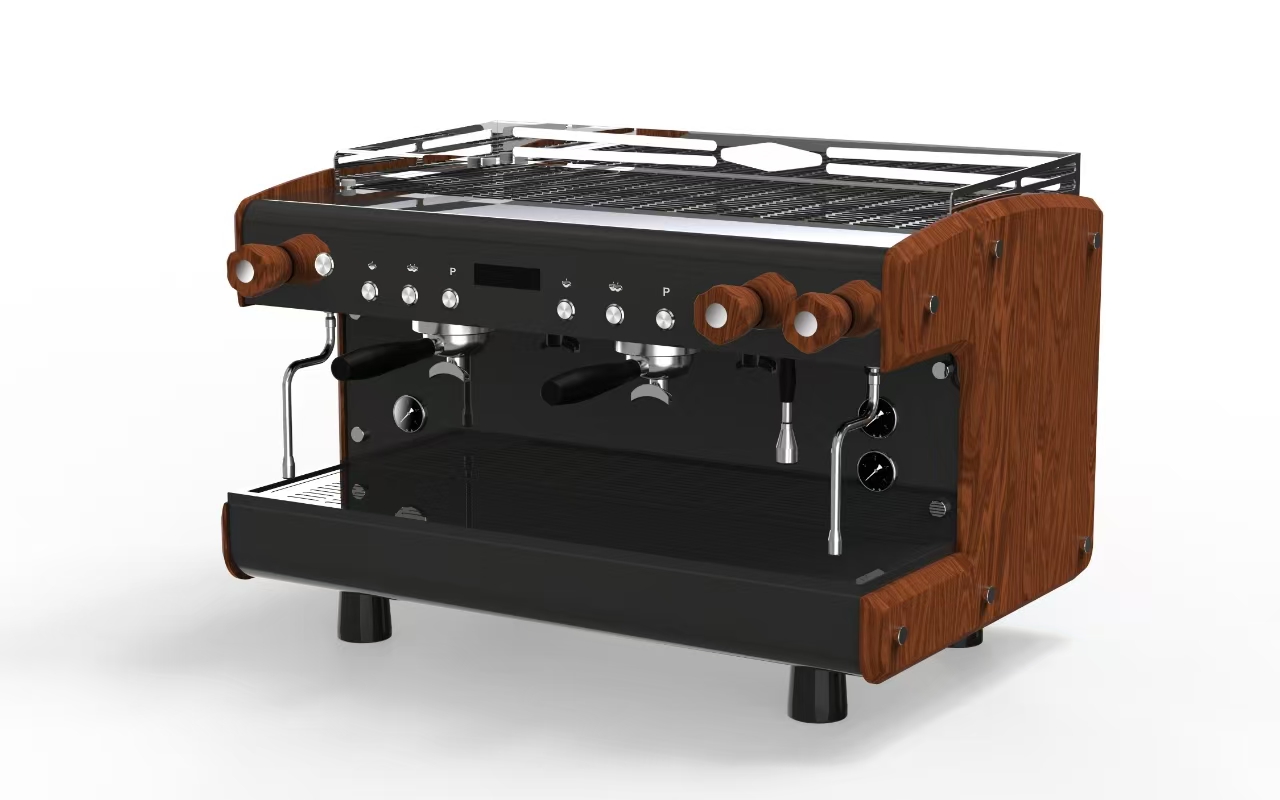
The housing is made from SUS 304 stainless steel. This provides a durable commercial surface that is practical for frequent cleaning around the group heads, drip tray and steam wands.
The KY-229 espresso machine is rated at 5700W, measures 78 × 61 × 53cm and weighs 60kg. Buyers must plan sufficient power, drainage, water supply and counter space before installation.
Should a Café Choose Two Group or Three Group Machines?
Three group machines provide an additional brewing group, but they also require more space, power and investment. A third group does not automatically increase drink speed if grinder capacity, milk preparation, staffing or bar layout remains the real bottleneck.
Both two group and three group espresso machines may offer two steam wands, depending on the model. Therefore, coffee shops serving many milk drinks should compare steam capacity and workflow, not only the number of group heads.
For many busy cafés and restaurants, a two group machine in the commercial espresso machines category offers a practical balance of output, cost and counter space. Three group commercial espresso machines are better considered when verified demand and staffing can use the additional group effectively.
Who Should Choose the KY-229 Group Espresso Machine?
The KY-229 suits a coffee shop that needs two baristas to prepare espresso drinks during morning, lunch or weekend rushes. Its separate steam boiler also supports businesses with a strong menu of lattes and cappuccinos.
Restaurants, hotels and bakeries can use this commercial espresso machine when coffee orders rise sharply after meals or during events. Distributors and equipment brands can also discuss configuration, branding and OEM/ODM requirements.
Low-volume offices or mobile counters may not need this much power or room. Selecting the right espresso machine should follow real demand, available space, budget and service capability.
What Should Buyers Check Before Choosing Commercial Espresso Machines?
Commercial espresso machines range widely in price. Initial cost should be compared with build quality, boiler design, temperature control, replacement parts, maintenance and supplier support.
Buyers often compare established brands such as La Marzocco, Victoria Arduino, Nuova Simonelli and Astoria. Brand reputation matters, but the best investment is an espresso machine that fits the business plan, local technical support and expected workflow.
Water filtration is essential for protecting boilers, valves, pipes and flowmeters. Daily cleaning should include flushing the brewing groups, wiping and purging the steam wands, and removing coffee and milk residue.
Because electrical standards vary by market, a qualified technician should confirm the KY-229 power supply, water connection and drainage requirements before installation.
Why Work with Huazell as Your Coffee Machine Manufacturer?
Huazell is a professional coffee equipment brand developed by Foshan KaYu for international buyers. Based in Foshan, Guangdong, Huazell focuses on the R&D, manufacturing and customization of commercial coffee equipment.
Its principal products include commercial espresso machines, dual- and multi-boiler coffee machines, heat-exchanger models and commercial coffee grinders. Huazell serves busy cafés, restaurants, hotels, distributors, importers and private-label brands.
Huazell’s advantages include integrated product development, production, quality inspection and after-sales communication. OEM/ODM options may cover logos, exterior colors, panels, packaging, voltage, plugs and other project requirements.
For buyers seeking a professional two group platform, the KY-229 espresso machine combines separate brew boilers, a high-capacity steam boiler, adjustable brewing control and commercial construction. Explore the KY-229 commercial espresso coffee machine or contact Huazell to discuss your market and application.