


Café chains, equipment distributors, hospitality groups, and office coffee suppliers need espresso without increasing training, maintenance, or downtime costs. Yet many commercial espresso machines still depend on fixed settings, manual checks, and reactive servicing. As a business expands, inconsistent extraction, delayed maintenance, and differences between baristas can weaken margins and brand standards. A future-ready semi automatic espresso machine should combine intelligent temperature control, guided workflow, and service-friendly construction while keeping the operator in control.
A future commercial semi automatic espresso machine will sense operating conditions, anticipate thermal demand, assist the barista, store approved brewing preferences, and identify maintenance risks before a breakdown occurs. Its purpose is not to replace skilled staff, but to improve consistency, reduce downtime, and lower ownership cost.
Some of these capabilities remain forward-looking, while others already appear in advanced semi automatic espresso platforms through independent boilers, flow meters, programmable pre infusion, and digital temperature control. Understanding the development path helps B2B buyers choose an espresso machine manufacturer whose equipment can support future operating requirements.
What Does Semi-Automatic Mean for an Espresso Machine?
A semi automatic espresso machine uses an electric pump to create brewing pressure, but the user normally starts and stops the espresso shot. The barista controls the dose, grind size, tamping, extraction time, and milk texture. This differs from an automatic espresso machine, which usually stops the shot automatically through a flow meter or programmed volume.
In practical terms, semi automatic machines preserve more human control. The operator can decide whether to prepare single or double shots, adjust the grind, change the dose, or stop extraction based on taste and shot behavior. An automatic espresso machine provides more repeatable shot volume, but it does not remove the need for a trained barista, grinder adjustment, or correct tamping.
A fully automatic espresso machine goes further by automating more of the process. Depending on the category, it may control grinding, dosing, tamping, brewing, and milk delivery. A super automatic system can produce drinks with minimal intervention, while a commercial semi automatic espresso machine keeps preparation visible and adjustable.
Semi Automatic Espresso Versus Automatic Espresso
The main difference between semi automatic espresso and automatic espresso is shot stopping. With a semi automatic espresso machine, the barista decides when extraction ends. With an automatic espresso machine, programmed water volume or flow-meter data ends the shot.
Price also matters. In many categories, semi automatic machines are more affordable than a comparable fully automatic espresso machine. However, an automatic espresso machine may reduce training time and make single or double shots more consistent during busy service. Buyers should compare the total operating balance rather than the purchase price alone.
Manual, Semi Automatic, Automatic, or Super Automatic?
A manual machine gives the operator direct control over pressure and water flow. It can create excellent espresso, but it requires skill and may not suit a high-volume commercial bar. A semi automatic espresso machine uses a pump while leaving shot timing to the barista, creating a practical balance between control and speed.
For a specialty café, semi automatic espresso often remains the preferred category because it preserves control over extraction and steaming milk. For hotels, offices, convenience stores, or self-service environments, automatic espresso or a fully automatic espresso machine may be better suited.
Predictive Temperature Control for Better Espresso
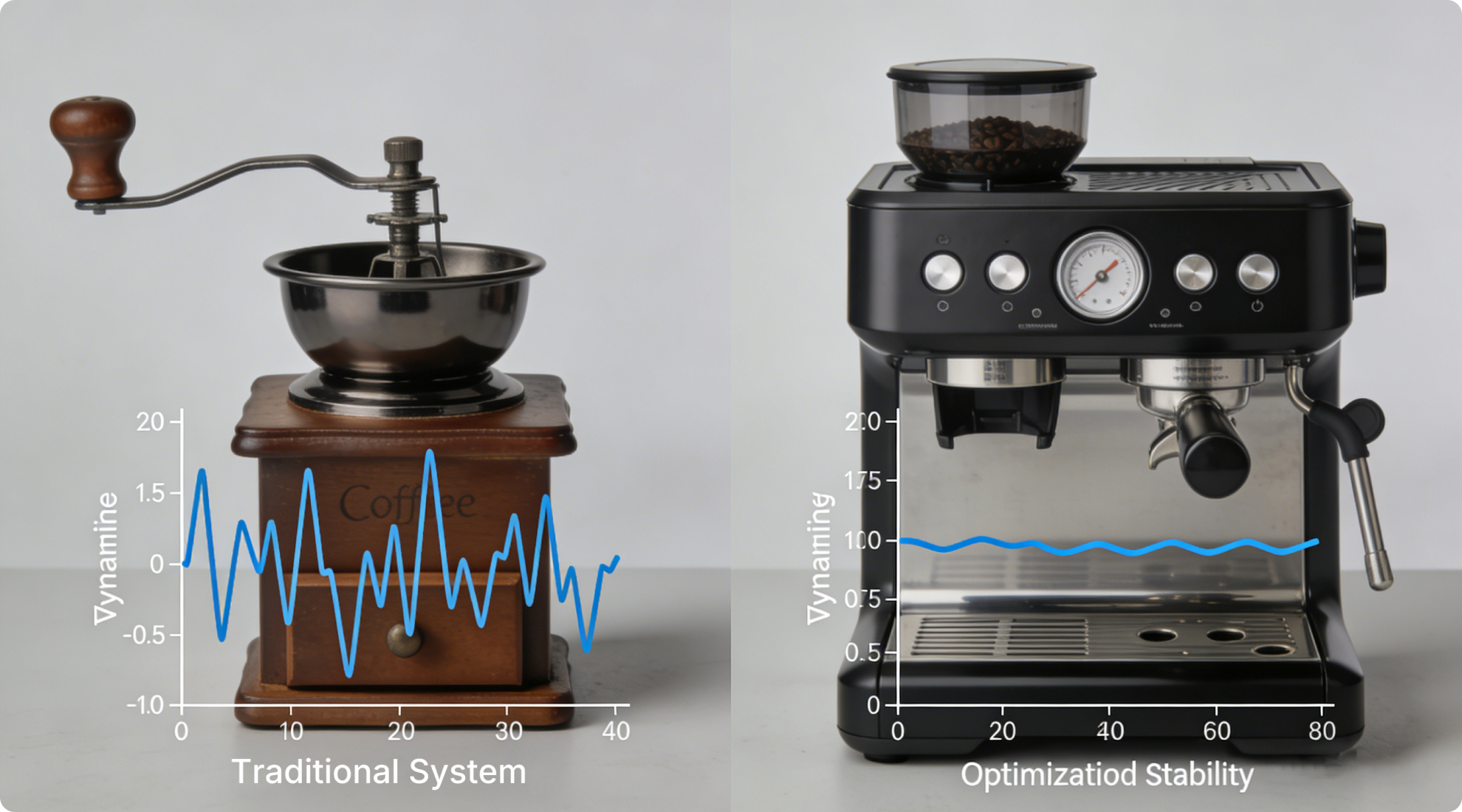
Traditional temperature control reacts after a sensor detects a change. A future semi automatic espresso machine could use multiple sensors to monitor boiler gradients, group head readiness, inlet-water temperature, and steam demand. Instead of only returning to a preset temperature, the machine could anticipate the next brew cycle.
PID technology already improves temperature precision. High-quality PID systems can stabilize brew temperature very closely, sometimes within about 0.1°F under controlled conditions. In future semi automatic espresso systems, PID temperature control may work together with flow, pressure, and usage data rather than acting as an isolated feature.
Single Boiler, Heat Exchanger, and Dual Boiler Designs
A single boiler machine uses one boiler for brewing and steam. It is basic and affordable, but the operator may need to wait when switching between brew temperature and steaming temperature. This design is common in a home machine, including some beginner-focused models.
A heat exchanger espresso machine uses one main boiler while allowing brewing and steam production at the same time. Heat exchanger systems are popular because they balance cost, capacity, and temperature performance. However, their thermal behavior depends on design, usage, and operator routine.
A dual boiler semi automatic espresso machine separates the brew boiler from the steam boiler. A dual boiler allows simultaneous brewing and steaming, improves temperature control, and supports high-volume milk drinks. For demanding commercial use, dual boiler or multi-boiler architecture is often better suited than a single boiler.
Adaptation to Local Operating Conditions
Water chemistry, room temperature, incoming water temperature, and daily volume vary between stores. The same semi automatic espresso machine may behave differently in a cool European café, a hot Middle Eastern hotel, or a humid Southeast Asian restaurant.
Future semi automatic espresso technology could learn these conditions and adjust heating rhythm without changing the approved recipe. This would help coffee chains maintain consistent espresso taste across multiple cities or countries.
Human-Led, Machine-Assisted Barista Operation
The future of the semi automatic espresso machine should remain human-led. Instead of replacing the barista, the machine could suggest a longer pre infusion, warn that the group head is not ready, or indicate that the grind may be too coarse based on extraction speed.
Experienced baristas would retain control over grind, dose, tamping, pressure, and shot time. Beginners could receive simple guidance that reduces avoidable mistakes. This balance helps a semi automatic espresso machine preserve craft while improving training efficiency.
Workflow Intelligence and Recipe Consistency
Workflow intelligence could help a semi automatic espresso machine remember approved recipes, recommended dose, extraction range, and milk settings. A chain could use these profiles to create more consistent espresso drinks across locations.
An automatic espresso machine already supports programmed shot volumes, but future automatic espresso systems may combine volume data with pressure, temperature, and flow. This could help operators identify whether a shot problem comes from the grinder, grind size, tamping, or coffee age.
Maintenance Intelligence and Daily Cleaning
A future semi automatic espresso machine could track operating hours, flow changes, cleaning cycles, and pump performance. Instead of depending on a handwritten log, the machine could remind staff to inspect seals, clean the group head, or schedule preventive service.
Daily care remains essential. Staff should empty the drip tray, rinse the portafilter, wipe the machine, and purge the steam wand after milk drinks. The frothing tip should be wiped immediately after steaming milk so dried residue does not block steam flow.
Backflush weekly when the model supports it. Descale every two to three months, or sooner when hard water and heavy use increase scale risk. A heat exchanger, single boiler, and dual boiler machine may each have different service procedures, so operators should follow the manufacturer’s instructions.
Modular Service Architecture for Commercial Buyers
A future commercial semi automatic espresso machine should be designed as a maintainable asset. Pumps, valves, control boards, flow meters, and sensors should be accessible without dismantling the entire machine.
Modular construction can reduce labor cost and downtime, but connections must remain secure. Components should be clearly labeled, and the supplier should provide wiring diagrams, service videos, and spare-parts lists.
What Home Espresso Machines Teach Commercial Buyers
Consumer products such as the Breville Barista line, Breville Bambino, Gaggia Classic Pro, Rancilio Silvia, KitchenAid machines, and La Marzocco Linea Mini appear frequently in discussions about the best semi automatic espresso machine. They help explain category differences, but they are not direct substitutes for high-volume commercial equipment.
The Breville Barista range is popular with beginners and enthusiasts because several models combine an espresso system with a built in grinder. A built in grinder saves counter space, but commercial buyers usually prefer a separate grinder that can be serviced, upgraded, and matched to daily volume.
The Breville Bambino is compact and affordable for home use. The Gaggia Classic Pro and Rancilio Silvia are often recommended under $1,000, while the La Marzocco Linea Mini represents a premium home espresso machine. Seattle Coffee Gear and other specialty retailers frequently compare these categories for consumers.
These examples show that the best semi automatic espresso machine depends on use. A Breville Barista or Breville Bambino may suit a household morning routine, but a commercial café needs larger boilers, stronger steam, service access, and reliable performance across hundreds of drinks.
Current Huazell Platforms Supporting Future Development
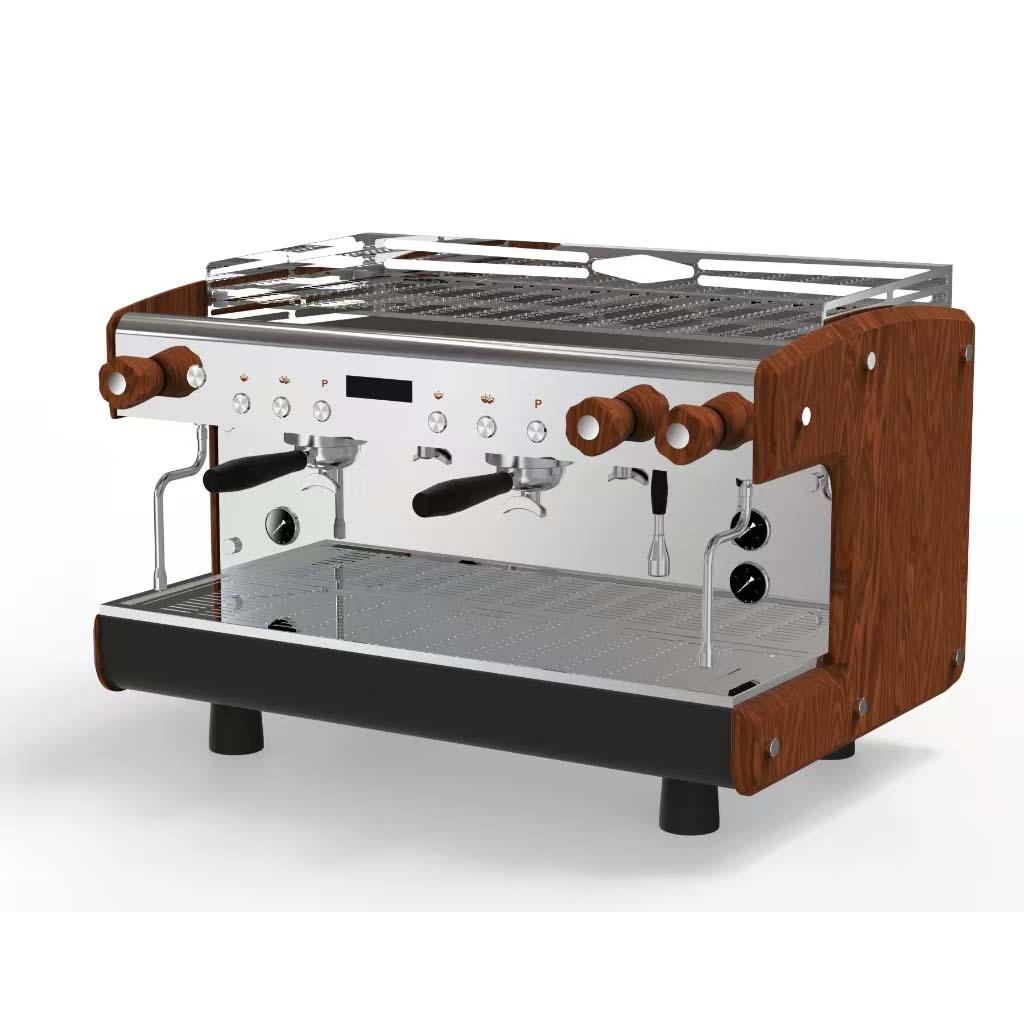
KY-229 Two-Group Triple-Boiler Semi Automatic Espresso Machine
The KY-229 semi automatic espresso machine demonstrates several technologies that can support future development. It uses a T3 heating system, a 10-liter steam boiler, and two independent 1-liter brew boilers.
Individual brew temperatures can be adjusted from 88°C to 95°C, while pre infusion can be set from 1 to 9 seconds. This multi-boiler configuration supports precision and independent control across two group heads.
The machine also includes a SUS 304 stainless-steel housing, copper internal pipes, an Italian FOT rotary pump, and Italian GICAR flow meters. It is suited to coffee shops and distributors that need simultaneous production, strong steam, and consistent single or double shots.
KY-T33 S Dual-Boiler Semi Automatic Espresso Machine
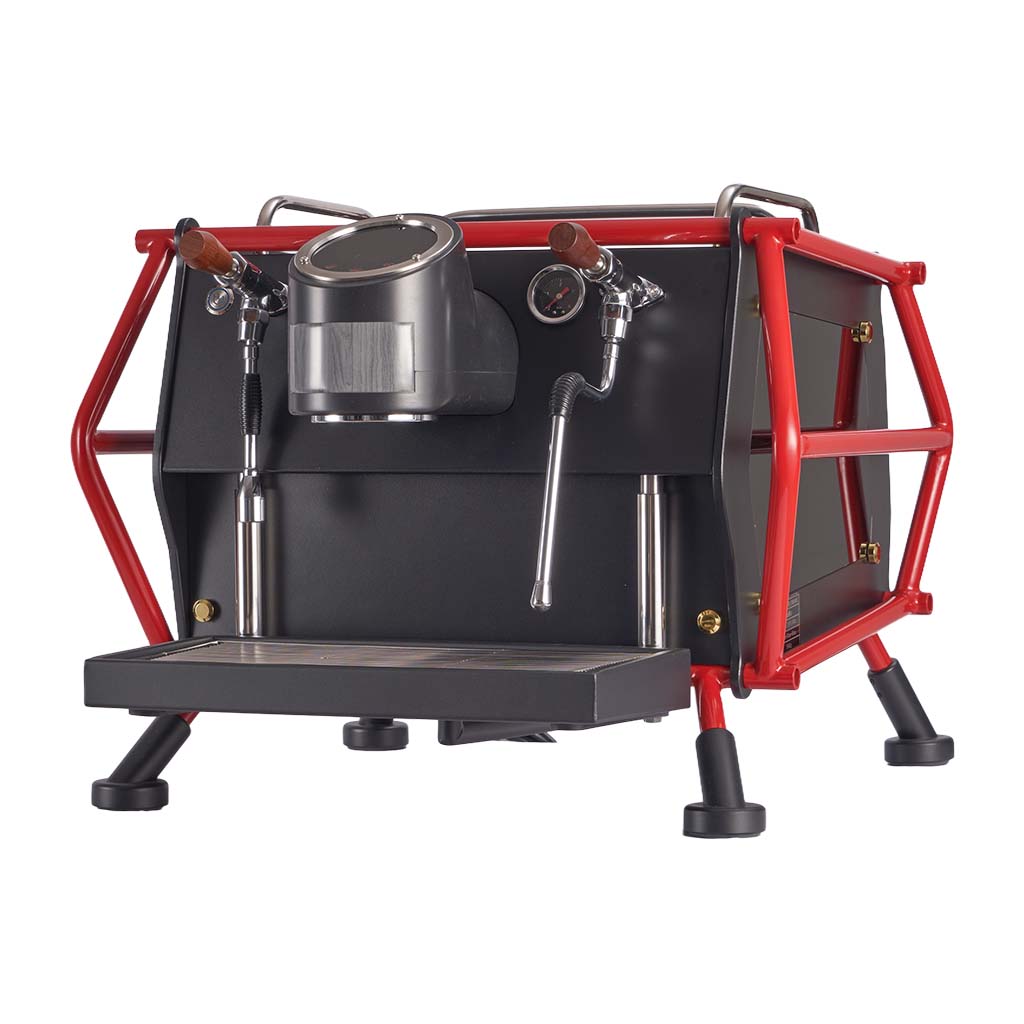
The KY-T33 S semi automatic espresso machine combines a 6-liter steam boiler with a 1-liter brew boiler. This dual boiler design supports brewing and steaming at the same time.
The machine provides individual temperature adjustment from 88°C to 95°C and uses a T3 heating system, copper pipes, SUS 304 stainless steel, an Italian FOT rotary pump, an Italian GICAR flow meter, and Italian ODE valves.
Are Semi-Automatic Espresso Machines Worth It?
A semi automatic espresso machine is worth considering when a business wants control, visible preparation, and flexibility for different coffees. It allows the barista to adjust grind, dose, tamping, shot time, and milk texture.
An automatic espresso machine may be better when repeatable volume and simplified training are the priority. A fully automatic espresso machine may suit locations with limited staff, while semi automatic espresso remains attractive for cafés that want a stronger craft identity.
The answer depends on budget, menu, staffing, daily output, and service support. Semi automatic equipment may have a lower initial cost than a comparable fully automatic system, but it requires a capable grinder and trained baristas.
Who Makes the Best Semi-Automatic Espresso Machine?
There is no single best manufacturer for every buyer. Breville, Gaggia, Rancilio, KitchenAid, and La Marzocco serve different consumer and premium categories, while commercial manufacturers focus on higher volume, boiler capacity, steam power, and serviceability.
The best semi automatic espresso machine for a café is the model that matches cup volume, menu, electrical supply, water quality, barista skill, and maintenance resources. A famous brand does not automatically make a machine suitable for every commercial setup.
B2B buyers should compare boiler type, heat recovery, pressure stability, portafilter size, steam wand design, grinder pairing, spare-parts supply, and warranty. The right supplier should explain both strengths and limits instead of claiming that one machine fits every business.
What Should B2B Buyers Look for in a Future-Ready Machine?
Buyers should separate available features from future concepts. Ask which control functions are already production-ready, which are optional, and which remain in development.
Compare single boiler, heat exchanger, dual boiler, and multi-boiler systems. Review temperature precision, pressure, pre infusion, group head design, pump type, steam capacity, and service access.
Also compare how a semi automatic espresso machine, automatic espresso machine, and fully automatic espresso machine fit the intended workflow. A café may prefer semi automatic control, while an office may prefer automatic espresso for convenience.
Conclusion
The future semi automatic espresso machine will combine intelligent heat management, workflow guidance, preventive maintenance, and modular construction. The strongest designs will improve espresso consistency while preserving the barista’s control.
Compared with an automatic espresso machine or fully automatic espresso machine, semi automatic espresso offers a distinctive balance of craft, flexibility, and commercial efficiency. For B2B buyers, the best investment is not the machine with the most technology, but the machine whose control, capacity, grinder requirements, and service system match the business.
Huazell supports B2B buyers with professional coffee machine and coffee grinder product lines for cafés, distributors, wholesalers, and OEM/ODM projects. Explore our espresso machine and grinder categories to build a stable, serviceable, and market-ready coffee equipment solution.